
Vasa's Capsize: Stability and Surviving Records
Imagine building the most terrifying, heavily armed warship in European naval history, only for it to tip over and sink in calm water before even clearing the harbor mouth! 🚢⚓
Topic guide
The King Wanted More Cannons: How Pride Overruled Physics
On August 10, 1628, thousands of cheering citizens gathered along the Stockholm waterfront to witness the maiden voyage of the Vasa—the Swedish warship. With 64 heavy bronze cannons split across two fully enclosed gun decks and hundreds of ornate carved oak sculptures celebrating royal triumphs, she was meant to terrify the Polish-Lithuanian Commonwealth into submission.
Instead, the spectacle lasted barely twenty minutes. About 1,300 meters from her shipyard mooring, a sudden summer breeze caught her sails. The massive ship heeled violently to port, righted herself sluggishly, and then caught a second, slightly stronger gust. This time, her open lower gunports dipped beneath the water surface. Tons of seawater rushed into the hull, and within minutes, the pride of King Gustavus Adolphus vanished beneath the waves in front of his horrified subjects.
The Flawed Lurch Test and the Impossible Ballast Equation
For centuries, folklore blamed the disaster on sabotage or incompetent Dutch shipbuilders. But modern naval architecture and seventeenth-century court martial transcripts tell a much more fascinating—and tragic—engineering story.
Months before the launch, Admiral Klas Fleming actually conducted a standard stability trial called a "lurch test." Thirty sailors ran across the deck from port to starboard three times. By the third sprint, the ship rocked so dangerously that Fleming halted the test out of fear she would capsize right at the quay. Yet nobody dared tell the King, who was writing urgent letters from the Prussian war front demanding the fleet's arrival. Furthermore, the ship was structurally trapped: her center of gravity was far too high due to the massive upper gun deck, but builders couldn't add more stone ballast without submerging her lower gunports below the waterline. When Anders Franzén rediscovered the remarkably preserved oak hull in 1956, researchers finally proved the structural flaws that doomed Sweden's mighty galleon. Let's dive into the archival records and salvage science together! 🕵️♀️⚓
🎬 The Aborted Lurch Test & Royal Timeline
The Royal Timeline: From King Gustavus's Demands to the Maiden Voyage
A meticulous breakdown drawn directly from Vasa Museum archives. It traces the king's mid-construction specification changes, the death of master shipwright Henrik Hybertsson, and the fateful rush to sea.
Expand reference video (YouTube)
The Aborted Lurch Test: Thirty Sailors Running Across the Deck
Examines the courtroom inquiry following the sinking. It highlights Admiral Fleming's terrifying pre-launch stability test and the institutional silence that prevented anyone from speaking truth to royal power.
Expand reference video (YouTube)
Institutional Blindspots: Why No One Stopped an Obvious Catastrophe
Focuses on the human and organizational factors behind the tragedy. It analyzes how the pressure of an ongoing war and authoritarian management forced an unseaworthy vessel into open water.
Expand reference video (YouTube)
🎬 Center of Gravity, Ballast & Gunports
The Ballast Paradox: Why Adding More Stone Was Structurally Impossible
Dimfold provides an exceptional architectural explanation of the ship's fatal dilemma: the hull already held 120 tons of ballast, and adding any more weight would have submerged the gunports before firing.
Expand reference video (YouTube)
Metacentric Height Explained: Center of Buoyancy vs. Center of Gravity
An engineering-first deep dive demonstrating how the heavy bronze cannons on the upper decks shifted Vasa's center of gravity above her metacenter, eliminating her natural righting moment in light wind.
Expand reference video (YouTube)
Top-Heavy Extravagance: Hundreds of Carved Oak Statues Above Deck
Explores the psychological and symbolic weight of seventeenth-century naval propaganda. The hundreds of heavy oak sculptures on the high sterncastle added unnecessary top-weight that worsened stability.
Expand reference video (YouTube)
🎬 1961 Salvage Engineering & Hull Findings
The 1961 Salvage Marvel: Hydraulic Jacks, Tunnels, and Pontoon Lifts
The incredible story of how Anders Franzén found the intact wreck in 1956 and how navy divers dug tunnels under the hull with water jets to lift her to the surface after 333 years in the brackish Baltic mud.
Expand reference video (YouTube)
Preserving a Time Capsule: Polyethylene Glycol and Timber Archaeology
Shows how maritime archaeologists conserved the saturated seventeenth-century timber using seventeen years of continuous wax spraying, turning a tragic military failure into one of the world's greatest museums.
Expand reference video (YouTube)
More Picks Ready for You
TuTu Dug Up 3 More Related Videos
+3
Keep exploring

Fingerprint Evidence: Error Rates and Human Judgement
How do forensic examiners compare partial crime-scene fingerprints, and where can human judgment introduce error? Join TuTu to explore the ACE-V framework, black-box false-positive rates, cognitive bias, and the 2004 Brandon Mayfield misidentification.

Roman Concrete: Lime Clasts and Self-Healing Claims
Investigating the material science behind ancient Roman concrete, examining MIT's lime clast discovery, hot mixing thermodynamics, and what laboratory tests actually prove about crack self-healing.
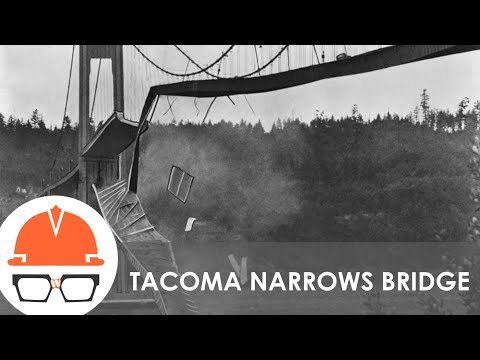
Tacoma Narrows Bridge Collapse: Flutter, Torsion & Wind Myths
Explore videos about the 1940 Tacoma Narrows Bridge collapse with TuTu. The collection brings together explanations of torsion, wind, resonance, and aeroelastic flutter for a closer look at how the event is described.

Following a Ghost Story: Retellings, Places and Source Notes
TuTu follows the questions behind a ghost story: which version is being told, where it was recorded and how later retellings describe it. This guide leaves historical origins open.
That’s this batch. More to explore another time.
This topic is AI-assisted and human-edited, and may contain errors or bias. If you own a featured video and do not want it displayed, please contact us.