
Following a Ghost Story: Retellings, Places and Source Notes
TuTu follows the questions behind a ghost story: which version is being told, where it was recorded and how later retellings describe it. This guide leaves historical origins open.
Topic guide
Follow the version in front of you
Who tells the story, where is it set, and where was this version recorded? TuTu approaches ghost stories through those questions rather than assuming a familiar plot has one verified origin.
A retelling and its source trail can be read separately. Publication dates, archive references and named researchers give different kinds of context; a shared story element alone does not establish a direct historical lineage. The origins remain open in this guide.
🎬 Retellings and Story Elements
Classical JG: Tracing the Vanishing Hitchhiker to Pre-Automobile Folklore
A masterclass in folkloric genealogy. Classical JG traces the modern disappearing hitchhiker back through 19th-century horse-drawn carriage tales to medieval oral traditions, demonstrating motif persistence across technological eras.
Expand reference video (YouTube)
The Ozark Archive: Deconstructing the Woman in White of Arkansas
An archival documentary tracking the localized 'Woman in White' ghost legend along Tilly Willy Bridge. By cross-referencing historical bridge construction records, newspaper morgues, and oral interviews across three generations, the creators illustrate how local folklore adapts to shifting highways.
Expand reference video (YouTube)
🎬 Archives and Publication Sources
Dark Archive History: Deconstructing the 1820 Bell Witch Manuscript Sources
An investigative examination of primary documentation surrounding Tennessee's Bell Witch. The creator cross-references the 1894 Ingram manuscript against contemporary 1820 land deeds and church trial records, revealing how oral legend evolved into published gothic horror.
Expand reference video (YouTube)
Dr. Emily Zarka (Monstrum): Spring-Heeled Jack and Victorian Penny Dreadfuls
Dr. Emily Zarka investigates how newspaper sensationalism, moral panic, and Victorian penny dreadfuls transformed scattered London assault rumors into the iconic supernatural specter Spring-heeled Jack. She reveals how mass media accelerates urban folklore into enduring myth.
Expand reference video (YouTube)
🎬 Legends and Media Context
The Folklore Archive: Fact-Checking Japan's Akamanto Urban Legend
The Folklore Archive breaks down the schoolhouse bathroom phantom Akamanto (Red Cloak). By comparing Showa-era rumor panic with post-war urban anxieties and historical kimono regulations, the team demonstrates how modern campfire retellings evolve from specific cultural fears.
Expand reference video (YouTube)
Synth-Sentinel Archive: Inoue Enryo's Meiji-Era Scientific Yokaigaku
An intellectual history of Dr. Inoue Enryo, the philosopher who founded 'Monsterology' (Yokaigaku) in 1880s Japan. It explains his critical taxonomy separating psychological illusions, natural misidentifications, and fabricated hoaxes from genuine cultural folklore.
Expand reference video (YouTube)
Dr. Emily Zarka (Monstrum): The Hat Man & Sleep Paralysis Hypnagogia
Dr. Emily Zarka dissects the viral 'Hat Man' shadow figure phenomenon. She connects internet creepypasta forum posts with global cross-cultural hypnagogic sleep paralysis experiences, illustrating how modern digital folklore gives modern shapes to ancient biological nightmares.
Expand reference video (YouTube)
More Picks Ready for You
TuTu Dug Up 4 More Related Videos
+4
Tracing the "Ma Da": Vietnam’s Terrifying Water Ghost Legend Explained
Who Walks the Halls of Himeji Castle | Restful Histories
The Haunted Folklore of Buried Cities: Whispers from the Vanished Cities
The Most Haunted Object in the World | The Terrifying True Story of the Dybbuk Box
Keep exploring

Fingerprint Evidence: Error Rates and Human Judgement
How do forensic examiners compare partial crime-scene fingerprints, and where can human judgment introduce error? Join TuTu to explore the ACE-V framework, black-box false-positive rates, cognitive bias, and the 2004 Brandon Mayfield misidentification.

Roman Concrete: Lime Clasts and Self-Healing Claims
Investigating the material science behind ancient Roman concrete, examining MIT's lime clast discovery, hot mixing thermodynamics, and what laboratory tests actually prove about crack self-healing.

Vasa's Capsize: Stability and Surviving Records
Vasa's 1628 sinking is explored through its stability trial, cannon layout, ballast constraints and surviving records. The collection connects the capsize account with later salvage and engineering research.
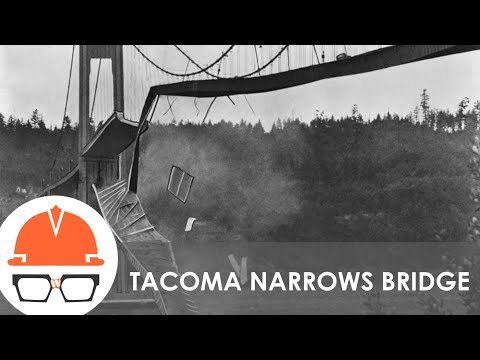
Tacoma Narrows Bridge Collapse: Flutter, Torsion & Wind Myths
Explore videos about the 1940 Tacoma Narrows Bridge collapse with TuTu. The collection brings together explanations of torsion, wind, resonance, and aeroelastic flutter for a closer look at how the event is described.
That’s this batch. More to explore another time.
This topic is AI-assisted and human-edited, and may contain errors or bias. If you own a featured video and do not want it displayed, please contact us.