
Bermuda Triangle: Rogue Waves, Science & Ocean Mysteries 🌊
Ghost ships, lost bombers, or rogue ocean physics? Explore the real science and captivating myths behind the Bermuda Triangle with TuTu! 🌊🔺
Topic guide
Into the Devil's Triangle: Separating Pulp Fiction from Maritime Reality
For nearly a century, no expanse of open ocean has captivated the human imagination quite like the Bermuda Triangle. Stretching roughly 500,000 square miles between Miami, Bermuda, and Puerto Rico, this sun-drenched patch of Caribbean and Atlantic waters has inspired countless tales of ghostly disappearances, compasses spinning wildly out of control, rogue extraterrestrial abductions, and ancient sunken civilizations. From the eerie vanishing of the USS Cyclops and its 309 crew members during World War I to the disappearance of five Navy Avenger bombers during Flight 19 in 1945, the Triangle has long been painted as a supernatural predator lurking on maritime charts. TuTu has collected videos comparing the stories and proposed explanations behind this maritime mystery. 🌊🔺✨
Before we navigate these choppy waters, here is a quick blindspot quiz from TuTu: 💡 What do major maritime insurers like Lloyd's of London and oceanographic agencies like NOAA actually say about accident rates in the Bermuda Triangle? Statistically speaking, vessels and aircraft do not disappear at a higher rate here than in any other heavily-trafficked corridor in the world! Yet the myth persists. So where did the legend actually start? It was kicked into high gear in 1964 by pulp fiction writer Vincent Gaddis, who coined the term in an article titled "The Deadly Bermuda Triangle." Watch LEMMiNO unpack the pop-culture birth of the legend in video 1 at 05:40! 👀🧭
Science Beneath the Waves: Rogue Waves, The Gulf Stream, and Extreme Depths
If the supernatural lore doesn't hold up under statistical scrutiny, what real natural phenomena explain the genuine tragedies that occurred here?
First, extreme meteorology and rogue waves. The Triangle is a global intersection for fierce hurricanes, equatorial squalls, and rapid cold fronts moving off North America. Oceanographers modeling wave interference patterns show that when storms from multiple directions converge, they can spawn spontaneous 100-foot "rogue waves" capable of snapping massive cargo freighters in half within seconds.
Second, the treacherous underwater topography and the Gulf Stream. The Puerto Rico Trench plummets to depths exceeding 27,000 feet—nearly the height of Mount Everest in reverse. Furthermore, the Gulf Stream behaves like a raging 5-knot aquatic highway running right through the Triangle. If a plane or boat loses power and sinks, this swift ocean river quickly sweeps debris dozens of miles away, leaving search-and-rescue teams staring at an empty ocean.
Third, human disorientation and navigational challenges. Historical compass "agonic lines" (where magnetic north and true north align) run through the region, historically confusing pilots who forgot to calculate magnetic declination. TuTu has collected documentary and science-explanation videos offering different perspectives on this maritime riddle. 🚢✈️
🎬 The Legend & Flight 19: Origin of the Myth & Vanished Patrol Bombers
LEMMiNO: The Legend of the Bermuda Triangle — Origin of the Myth & Media Lore
Legendary investigative documentary creator LEMMiNO traces the origins of the Devil's Triangle from Vincent Gaddis's 1964 pulp magazine article to maritime realities, dissecting how normal shipping incidents were sensationalized into supernatural folklore.
Expand reference video (YouTube)
BBC Studios: The Vanishing of Flight 19 — Navigational Confusion & Lost Bombers
BBC archival footage analyzes the fateful December 1945 training run of five Navy Avenger bombers, examining compass failure transcripts, disorienting cloud cover, and emergency fuel exhaustion.
Expand reference video (YouTube)
HISTORY: Marine Search Expeditions & Wreckage Verification Attempts
Investigates modern oceanographic expeditions searching for the lost Avenger bombers, detailing sonar sweeps, deep-sea divers, and the forensic challenges of confirming naval crash sites.
Expand reference video (YouTube)
🎬 Ocean Physics & Meteorology: 100-Foot Rogue Waves & Gulf Stream Currents
National Geographic: Rogue Waves & Rapid Tropical Squalls in the Atlantic
National Geographic marine scientists and meteorologists model how colliding storm fronts off the Florida Straits generate sudden 100-foot rogue waves and microbursts capable of overwhelming vessels without Mayday signals.
Expand reference video (YouTube)
Astrum Earth: Ocean Floor Bathymetry — Puerto Rico Trench & Underwater Geography
Explores the extreme underwater topography of the region, including the Puerto Rico Trench plunging over 27,000 feet deep and strong underwater currents that sweep submerged wreckage away rapidly.
Expand reference video (YouTube)
🎬 Testing the Science: Magnetic Anomalies & Methane Hydrate Buoyancy
National Geographic: Magnetic Anomalies & Compass Agonic Lines Examined
Investigates geomagnetic theories surrounding the Triangle, separating historic myths about compass variations from geological magnetic surveying data to reveal real-world navigational drift.
Expand reference video (YouTube)
Naked Science: Methane Hydrate Eruptions & Ocean Buoyancy Science
Tests laboratory experiments evaluating whether undersea methane gas eruptions could drastically reduce water density and sink cargo hulls, contrasting scientific viability against historical occurrences.
Expand reference video (YouTube)
More Picks Ready for You
TuTu Dug Up 3 More Related Videos
+3
Keep exploring

Fingerprint Evidence: Error Rates and Human Judgement
How do forensic examiners compare partial crime-scene fingerprints, and where can human judgment introduce error? Join TuTu to explore the ACE-V framework, black-box false-positive rates, cognitive bias, and the 2004 Brandon Mayfield misidentification.

Roman Concrete: Lime Clasts and Self-Healing Claims
Investigating the material science behind ancient Roman concrete, examining MIT's lime clast discovery, hot mixing thermodynamics, and what laboratory tests actually prove about crack self-healing.

Vasa's Capsize: Stability and Surviving Records
Vasa's 1628 sinking is explored through its stability trial, cannon layout, ballast constraints and surviving records. The collection connects the capsize account with later salvage and engineering research.
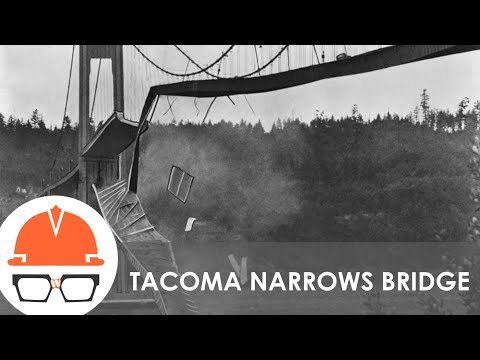
Tacoma Narrows Bridge Collapse: Flutter, Torsion & Wind Myths
Explore videos about the 1940 Tacoma Narrows Bridge collapse with TuTu. The collection brings together explanations of torsion, wind, resonance, and aeroelastic flutter for a closer look at how the event is described.
That’s this batch. More to explore another time.
This topic is AI-assisted and human-edited, and may contain errors or bias. If you own a featured video and do not want it displayed, please contact us.