
Bermuda Triangle Mystery: Flight 19 & Ocean Science Truth
"Both compasses are broken, the water looks white..." Join TuTu as we investigate the chilling Flight 19 disappearance and uncover what science reveals about the Bermuda Triangle! 📁👀
Topic guide
The Disappearance of Flight 19: The Genesis of Modern Legend
On the afternoon of December 5, 1945, five US Navy TBM Avenger torpedo bombers took off from Fort Lauderdale, Florida, for a routine navigation training exercise known as Flight 19. The weather was initially clear, yet hours later, flight leader Lt. Charles Taylor radioed alarming transmissions: "Both of my compasses are out and I am trying to find Fort Lauderdale... everything is wrong, even the ocean doesn't look as it should!" The five planes and a rescue flying boat with 13 crew members vanished without leaving an oil slick or piece of wreckage behind.
Before diving into paranormal vortexes and alien abductions, TuTu has a quick blindspot quiz for you: According to the US Coast Guard and Lloyd's of London, does the Bermuda Triangle actually have an abnormally high shipwreck rate compared to other ocean routes? 💡 The historical data reveals a shocking reality: proportional to the heavy cruise and freight traffic crossing the Caribbean, casualty rates are statistically indistinguishable from any other open-ocean transit zone! So why did it capture the global imagination?
Unveiling the Science: Methane Gas Blowouts, Rogue Waves and Agonic Lines
TuTu has collected six video perspectives on the accounts and proposed explanations: starting with the harrowing cockpit radio transcripts and naval board inquiries into Flight 19, before examining groundbreaking oceanographic discoveries. Discover how subsea methane gas hydrates can violently erupt to drop water density instantly sinking vessels, and how the Gulf Stream collides with Caribbean storms to generate towering 100-foot rogue waves.
Join TuTu in comparing the historical accounts, scientific explanations, and questions these videos raise. 🔎🌊
🎬 Flight 19 Case Investigation & Naval Records
What Happened to Flight 19? BBC Historical Breakdown
BBC's classic documentary provides authentic radio cockpit transmissions and naval charts reconstructing Lt. Taylor's tragic spatial disorientation over the Bahamas.
Expand reference video (YouTube)
History's Greatest Mysteries: Flight 19 Search Expedition
Explores deep-sea salvage efforts using sonar mapping, analyzing potential Avenger wreck sites off the coast of Florida with forensic precision.
Expand reference video (YouTube)
The Disappearance That Built the Legend
Narrates how the mysterious loss of the PBM Mariner search aircraft created an aura of invincibility around the myth of the Devil's Triangle.
Expand reference video (YouTube)
🎬 Science, Rogue Waves & Statistical Reality
How Ocean Physics Explains Mysterious Vanishings
Demonstrates laboratory simulations of methane hydrate bubble eruptions, illustrating how micro-bursts of gas drastically lower buoyancy and sink models instantly.
Expand reference video (YouTube)
Modern Oceanographic Findings in the Sargasso Sea
Examines bathymetric floor mapping of the Puerto Rico Trench, investigating underwater topography and extreme storm confluence zones.
Expand reference video (YouTube)
The Truth Behind the Myth: Statistical Realities
A sharp, witty deconstruction of how author Charles Berlitz selectively omitted good weather logs to create fictional disappearances out of mundane storms.
Expand reference video (YouTube)
More Picks Ready for You
TuTu Dug Up 2 More Related Videos
+2
Keep exploring

Fingerprint Evidence: Error Rates and Human Judgement
How do forensic examiners compare partial crime-scene fingerprints, and where can human judgment introduce error? Join TuTu to explore the ACE-V framework, black-box false-positive rates, cognitive bias, and the 2004 Brandon Mayfield misidentification.

Roman Concrete: Lime Clasts and Self-Healing Claims
Investigating the material science behind ancient Roman concrete, examining MIT's lime clast discovery, hot mixing thermodynamics, and what laboratory tests actually prove about crack self-healing.

Vasa's Capsize: Stability and Surviving Records
Vasa's 1628 sinking is explored through its stability trial, cannon layout, ballast constraints and surviving records. The collection connects the capsize account with later salvage and engineering research.
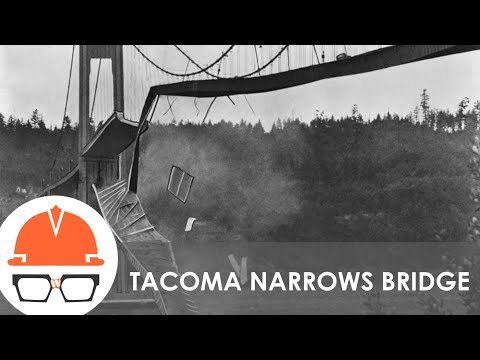
Tacoma Narrows Bridge Collapse: Flutter, Torsion & Wind Myths
Explore videos about the 1940 Tacoma Narrows Bridge collapse with TuTu. The collection brings together explanations of torsion, wind, resonance, and aeroelastic flutter for a closer look at how the event is described.
That’s this batch. More to explore another time.
This topic is AI-assisted and human-edited, and may contain errors or bias. If you own a featured video and do not want it displayed, please contact us.