
Roman Concrete: Lime Clasts and Self-Healing Claims
Why ancient Roman concrete outlasts modern structures: Hot mixing, quicklime thermodynamics, and self-healing lime clasts explained.
Topic guide
The Overlooked White Lumps: Re-evaluating Ancient Lime Clasts
For centuries, archaeologists and civil engineers marveling at the unreinforced dome of Rome's Pantheon assumed its enduring strength came from extraordinary volcanic ash and meticulous craftsmanship. The ubiquitous white millimeter-scale mineral inclusions scattered throughout ancient mortars—long termed 'lime clasts'—were largely dismissed as sloppy mixing by Roman laborers. However, groundbreaking material characterization led by MIT researchers has upended this assumption. Far from being construction defects, these clasts represent deliberate inclusions resulting from 'hot mixing,' where reactive quicklime (calcium oxide) was introduced directly into the aggregate paste, releasing intense thermal energy during hydration.
Laboratory Realities: What Self-Healing Can and Cannot Do
Under high-resolution imaging and controlled stress fractures, the true utility of these lime clasts becomes apparent: because they remain porous and chemically brittle, micro-cracks naturally propagate directly through them rather than tearing the broader matrix. When rainwater seeps into these fissures, it dissolves calcium from the clast reservoirs, recrystallizing as calcite within weeks to seal the void before catastrophic spalling can occur. Yet, claims that Roman concrete was universally 'superior' to modern building materials require grounded scientific skepticism. Roman concrete lacked tensile reinforcement, requiring massive bulk geometry to handle compressive loads. Much like organizing complex workflows in our personal knowledge management guide, understanding ancient material science requires separating reproducible chemical mechanisms from mythologized folklore.
🎬 The Lime Clast Discovery & Hot Mixing Chemistry
Portland Cement vs Pozzolanic Matrix: Long-Term Crack Resistance
Compares modern Portland cement curing timelines with ancient pozzolanic matrix stability and long-term crack resistance.
Expand reference video (YouTube)
Hot Mixing Thermal Kinetics: How Quicklime Formed Calcium Clasts
Details the thermal kinetics of quicklime hydration and how high-temperature curing formed reactive calcium-rich inclusions.
Expand reference video (YouTube)
Spectroscopic Analysis of Ancient Harbor Samples & Tobermorite Growth
Examines spectroscopic analysis of ancient harbor samples and the growth of tobermorite crystals under marine exposure.
Expand reference video (YouTube)
🎬 Crack Sealing Mechanics & Seawater Pozzolanic Reaction
Laboratory Stress Fractures: Halting Water Flow via Calcite Sealing
Demonstrates laboratory stress-fracture experiments where water flow through cracked specimens halted as calcite recrystallized.
Expand reference video (YouTube)
Pozzolana Volcanic Tephra: Buffering Moisture Against Degradation
Analyzes the chemical role of Pozzolana volcanic tephra in buffering moisture and preventing internal matrix degradation.
Expand reference video (YouTube)
🎬 Ancient Trade Secrets vs Modern Portland Cement Reality
Undocumented Craft Practices: Why Hot Mixing Faded Post-Empire
Explores why hot mixing trade practices were undocumented in classical texts and faded after imperial trade route disruptions.
Expand reference video (YouTube)
Mass Compression Architecture vs Modern Steel-Reinforced Limits
Draws clear mechanical distinctions between unreinforced compression architecture and modern steel-reinforced structural limits.
Expand reference video (YouTube)
Modern Commercialization: Adapting Pozzolanic Binders Today
Outlines ongoing commercialization efforts seeking to adapt hot-mixed pozzolanic binders for low-carbon public infrastructure.
Expand reference video (YouTube)
More Picks Ready for You
TuTu Dug Up 3 More Related Videos
+3
Keep exploring

Fingerprint Evidence: Error Rates and Human Judgement
How do forensic examiners compare partial crime-scene fingerprints, and where can human judgment introduce error? Join TuTu to explore the ACE-V framework, black-box false-positive rates, cognitive bias, and the 2004 Brandon Mayfield misidentification.

Vasa's Capsize: Stability and Surviving Records
Vasa's 1628 sinking is explored through its stability trial, cannon layout, ballast constraints and surviving records. The collection connects the capsize account with later salvage and engineering research.
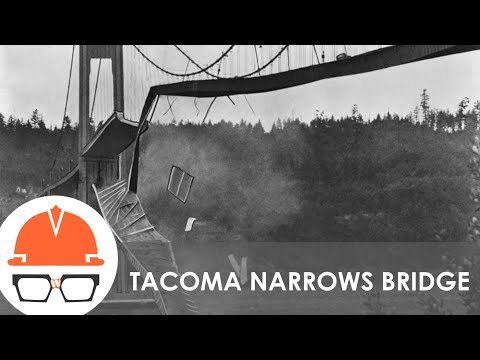
Tacoma Narrows Bridge Collapse: Flutter, Torsion & Wind Myths
Explore videos about the 1940 Tacoma Narrows Bridge collapse with TuTu. The collection brings together explanations of torsion, wind, resonance, and aeroelastic flutter for a closer look at how the event is described.

Following a Ghost Story: Retellings, Places and Source Notes
TuTu follows the questions behind a ghost story: which version is being told, where it was recorded and how later retellings describe it. This guide leaves historical origins open.
That’s this batch. More to explore another time.
This topic is AI-assisted and human-edited, and may contain errors or bias. If you own a featured video and do not want it displayed, please contact us.