
The Backrooms and SCP: Lore, Levels, and Internet Horror
Step into the infinite yellow halls and classified vaults of modern internet folklore. Discover how The Backrooms, SCP, and Analog Horror redefined psychological terror.
Topic guide
Digital Liminality and Collaborative Folklore: The Rise of Internet Horror
In an era where algorithmic feeds dictate mainstream entertainment, a new movement of grassroots psychological horror has emerged from message boards, collaborative wikis, and independent digital animators. Unlike traditional cinematic horror that relies heavily on predictable jump scares and explicit monsters, modern internet mythology thrives on atmospheric dread, architectural uncanny valleys, and open-source worldbuilding. The Backrooms began not as a sprawling novel or film franchise, but as a single anonymous 4chan post in May 2019 showcasing an empty, fluorescent-lit office room with damp carpet and mono-yellow wallpaper. Paired with a chilling warning about 'no-clipping out of reality', this minimal premise ignited a global creative phenomenon. It introduced millions of viewers to the concept of liminal spaces—transitional environments caught between utility and abandonment, where familiar domestic structures feel unnervingly detached from human purpose.
Simultaneously, the SCP Foundation has pioneered crowdsourced speculative fiction for nearly two decades. Born from the infamous SCP-173 post on 4chan's paranormal board in 2007, the universe expanded into an encyclopedic archive of thousands of anomalous objects classified under pseudo-bureaucratic clinical terminology like Safe, Euclid, and Keter. By cloaking supernatural horrors in redacted case files, containment protocols, and institutional detachment, the SCP mythos taps into deep-seated cultural anxieties surrounding classified governmental secrecy, unchecked scientific hubris, and the existential fragility of everyday reality.
Analog Paranoia and Found Footage Cinema: Redefining Modern Terror
The evolution of internet horror took a quantum leap forward through the medium of analog video. Rather than polished high-definition CGI, creators weaponized the artifacts of magnetic tape—tracking static, distorted audio frequencies, degraded CRT phosphors, and government emergency alert sirens. Kris Straub's seminal series Local58 established the foundational grammar of analog horror by simulating hijacked television broadcasts in Mason County, West Virginia, where mundane meteorological warnings gradually twist into apocalyptic directives warning viewers not to look at the night sky. Following in this trajectory, Alex Kister's The Mandela Catalogue merged religious iconology with doppelganger terror, exploring metaphysical awareness disorders transmitted through cathode-ray televisions.
Perhaps no single creator exemplifies this renaissance more vividly than teenage filmmaker Kane Parsons (Kane Pixels). His 2022 short film 'The Backrooms (Found Footage)' transformed a static meme into an immersive cinematic masterclass. By grounding the yellow labyrinth in a fictional 1980s corporate research narrative involving the Async Foundation's Project KV-31, Parsons seamlessly connected retro-scientific optimism with cosmic dread. This curated guide brings together the most essential deep-dive video essays, documentary deconstructions, and genre-defining cinematic shorts, offering readers an authoritative roadmap into the lore, psychological mechanisms, and creative ingenuity driving contemporary internet folklore.
🎬 The Backrooms: Liminal Origins and Async Lore
Kane Pixels: The Original Found Footage Short That Redefined Internet Horror
The legendary 2022 short film that transformed a 4chan creepy pasta into a worldwide cinematic sensation, capturing the claustrophobic dread of slipping out of reality into mono-yellow corridors.
Expand reference video (YouTube)
Film Theory: Deconstructing Kane Pixels' Async Lore and Project KV-31 Timeline
MatPat synthesizes the comprehensive 1970s–1990s timeline of the Async Foundation, detailing how the low proximity magnetic distortion system fractured space-time and initiated reality-wide no-clipping.
Expand reference video (YouTube)
Horror History: From 2019 4chan Post to Liminal Space Psychological Phenomenon
An exhaustive historical documentary tracing the 2002 Wisconsin furniture store photograph, 90s video game no-clip mechanics, and the psychology of incongruent affect and liminal environments.
Expand reference video (YouTube)
🎬 SCP Foundation: Bureaucracy and Open-Source Mythology
The SCP Foundation Explained: Containment Classes, O5 Council, and D-Class Fodder
A visual primer on the Foundation's core mission to secure, contain, and protect anomalous phenomena, breaking down Safe, Euclid, Keter, and Thaumiel classification tiers with iconic case studies.
Expand reference video (YouTube)
PBS Monstrum: How SCP Redefined Modern Folklore Through Collaborative Writing
Folklorist Dr. Emily Zarka analyzes the genesis of SCP-173, demonstrating how bureaucratic clinical rhetoric, redacted Case Files, and crowdsourced wiki authorship forged a new era of digital mythology.
Expand reference video (YouTube)
🎬 Analog Horror: Hijacked Signals and VHS Nightmares
Wendigoon: The Masterful Terror of Local58 and Broadcast Hijacking
A deep dive into Kris Straub's groundbreaking web series that birthed analog horror, analyzing fake EAS weather alerts, psychological conditioning broadcasts, and the cosmic horror of the lunar entity.
Expand reference video (YouTube)
Film Theory: Decoding The Mandela Catalogue and Metaphysical Awareness Disorder
An intricate deconstruction of Alex Kister's analog horror universe, examining religious subversion, television-borne psychological parasites, and the terrifying concept of unstoppable Alternates.
Expand reference video (YouTube)
More Picks Ready for You
TuTu Dug Up 10 More Related Videos
+10
Backrooms - Found Footage #2
Film Theory: The Backrooms is Your WORST Nightmare
Backrooms Lore in 30 Minutes!
The Backrooms: A Frontier of Fear - Kane Pixels’ Series & Movie Theories & Analysis
SCP Foundation Explained (SCP Animated)
Exploring the SCP Foundation: A Collection of Canons Explored
SCP Groups of Interest Explained In 11 Minutes
Revisiting Local58: The Original Analog Horror
The Scariest Series on YouTube: Gemini Home Entertainment
Analog Horror Monsters Explained in 32 Minutes (All Parts)
Keep exploring

Fingerprint Evidence: Error Rates and Human Judgement
How do forensic examiners compare partial crime-scene fingerprints, and where can human judgment introduce error? Join TuTu to explore the ACE-V framework, black-box false-positive rates, cognitive bias, and the 2004 Brandon Mayfield misidentification.

Roman Concrete: Lime Clasts and Self-Healing Claims
Investigating the material science behind ancient Roman concrete, examining MIT's lime clast discovery, hot mixing thermodynamics, and what laboratory tests actually prove about crack self-healing.

Vasa's Capsize: Stability and Surviving Records
Vasa's 1628 sinking is explored through its stability trial, cannon layout, ballast constraints and surviving records. The collection connects the capsize account with later salvage and engineering research.
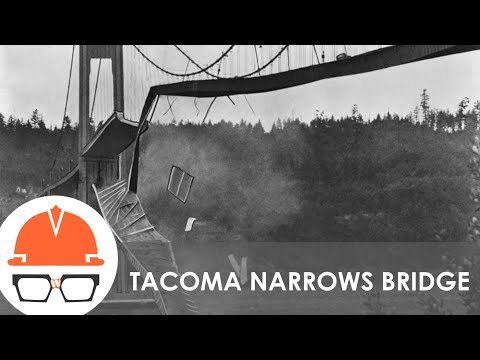
Tacoma Narrows Bridge Collapse: Flutter, Torsion & Wind Myths
Explore videos about the 1940 Tacoma Narrows Bridge collapse with TuTu. The collection brings together explanations of torsion, wind, resonance, and aeroelastic flutter for a closer look at how the event is described.
That’s this batch. More to explore another time.
This topic is AI-assisted and human-edited, and may contain errors or bias. If you own a featured video and do not want it displayed, please contact us.