
Math Error Logs: Concept Errors vs Calculation Slips
Replace vague 'be more careful' reminders with a structured math error log that separates conceptual gaps from mechanical calculation and sign slips.
Topic guide
Why Writing 'Be More Careful' in Your Math Notes Never Works 👀
We have all been there: you get a math test or practice set back, spot a dropped negative sign or a misread radius-versus-diameter prompt, sigh, and scribble "stop making silly mistakes!! 🫠" at the top of the page. Then the next exam rolls around and—plot twist—you make the exact same slip under time pressure.
Real talk: lumping every wrong answer under the vague label of "careless mistake" hides what actually went sideways. Join TuTu as we look at how high-scoring problem solvers and math educators use a structured Math Error Log (or mistake journal) to turn wrong answers into concrete diagnostic data ✨. Instead of grinding through ratusan random practice problems, you audit the ones you missed and sort them by root cause.
Concept Gaps vs. Calculation Slips: How to Tag Your Worked Examples 💡
When you review a worked example line by line, every mistake generally falls into one of two distinct buckets—and each bucket needs a completely different fix:
- Concept & Approach Errors: You didn't know which formula applied, misunderstood an inequality rule, or set up the wrong equation from the start. You cannot fix a concept error by "slowing down"; you have to revisit the underlying theorem, compare your setup against a worked model, and redo a similar problem cold a few days later.
- Calculation, Sign & Transfer Slips: You knew the exact math logic, but dropped a negative when distributing, copied a number wrong from the prompt to your scratch paper, forgot to flip an inequality sign, or solved for $x$ when the final sentence asked for $2x + 1$ 🔥. For these slips, your error log records a specific mechanical trigger—such as underlining the final question noun before picking an option, or writing every distribution step on its own line.
Let's check out how students, test-prep coaches, and classroom teachers set up error logs and test correction templates that actually stick!
🎬 Setting Up a Math Mistake Journal: Error Categories & Root-Cause Tagging
5 Mistake Categories Explained: Setting Up a Notebook to Track Patterns
Walks through how a simple $2 notebook turns wrong answers into a structured roadmap. At 01:29, it breaks down the five core mistake categories—separating true content/concept gaps from misreads and calculation slips—followed by a step-by-step journal layout at 03:10 and a 20-minute weekly review routine 📝.
Expand reference video (YouTube)
7 Math Error Types: Separating Calculation, Formula, Concept & Approach Mistakes
Instead of just checking the answer key and moving on, this guide splits math errors into seven clear buckets: calculation mistakes, formula recall errors, conceptual misunderstandings, approach flaws, question misreads, careless slips, and reasoning gaps. Super helpful for tagging why a problem went wrong before you retry it 💡.
Expand reference video (YouTube)
🎬 Auditing Calculation Slips: Dropped Negatives, Distribution & Question Misreads
16 Specific Algebra & Arithmetic Slips: Distribution, Inequality Flips & Dropped Negatives
Erika from Target Test Prep catalogs 16 mechanical math errors that happen even when you know the concept cold—including distribution errors (00:29), forgetting to flip inequalities (03:05), dropping a negative sign (06:41), and stopping one step short of what the prompt asked (11:21). These exact labels make awesome tags for your personal error log 🔥.
Expand reference video (YouTube)
4 Causes of Mechanical Math Slips: Prompt Misreads, Data Transfer & Verification Habits
Breaks non-conceptual errors into four actionable buckets at 01:28: misreading the final question prompt, mistransferring numbers between scratch work and screen, algebra sign slips, and formula mix-ups. At 02:32, it pairs each slip with a concrete check habit like rereading the last sentence before locking in an answer 👀.
Expand reference video (YouTube)
Writing Specific Error Entries: Turning 'Silly Mistakes' Into Concrete Checklists
Demonstrates why your error log entries need ultra-specific wording—like 'neglected to distribute the negative sign' or 'used radius instead of diameter in the area formula'—and how reading your personal pitfall checklist right before an exam primes your brain to catch your own habits 🎯.
Expand reference video (YouTube)
🎬 Worked-Example Error Analysis & Test Correction Templates
Professor V's Scratch-Work & Exam Habits: Catching Arithmetic Slips Line by Line
A college calculus professor shares how she broke her own high-school habit of losing points to arithmetic slips despite understanding the material. She emphasizes neat, vertical step-by-step scratch work and auditing practice homework under realistic conditions rather than brushing off small calculation errors 🙌.
Expand reference video (YouTube)
Worked-Example Error Analysis: Finding the Exact Step Where a Solution Goes Off Track
Explains why assigning more practice problems doesn't fix a recurring mistake if the student hasn't inspected the faulty step. Shows how structured error-analysis sheets train learners to inspect a worked solution, circle the exact line where the logic or arithmetic broke, and explain why 📐.
Expand reference video (YouTube)
Structured Test Correction Templates: Explaining the Mistake Alongside the New Solution
High school math teacher Lindsay Bowden shares how to structure a test correction template so you don't just copy down the right answer—you have to write a sentence identifying what went wrong in your original attempt alongside the corrected step-by-step work ✨.
Expand reference video (YouTube)
More Picks Ready for You
TuTu Dug Up 3 More Related Videos
+3
Keep exploring
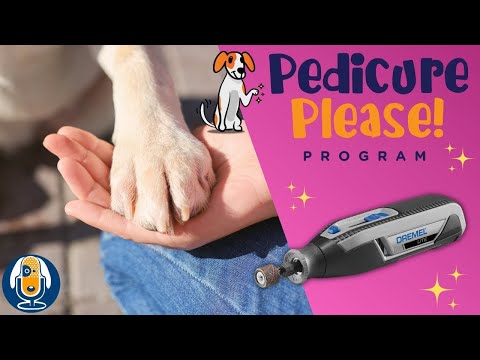
Dog Nail Care: Cooperative Training & Stop Signals Guide
Turn nail trims from a dreaded wrestling match into voluntary cooperative care. Learn how chin-rest consent cues, stop signals, and gradual desensitization keep your dog relaxed and safe.

EPUB Library Loans: Formats, DRM and Accessibility
Borrowing digital library books often means running into mysterious .acsm files, DRM authorizations, and e-reader sync headaches. TuTu breaks down how EPUB loans work, from Adobe Digital Editions to Libby accessibility tools.

Roman Concrete: Lime Clasts and Self-Healing Claims
Investigating the material science behind ancient Roman concrete, examining MIT's lime clast discovery, hot mixing thermodynamics, and what laboratory tests actually prove about crack self-healing.

Walking Bass: Chord Tones and Connecting Notes
Want your walking bass lines to groove instead of sounding like random scale drills? TuTu breaks down how to anchor harmony with roots and arpeggio chord tones on strong beats while weaving smooth chromatic and scale passing notes between chord changes.
That’s this batch. More to explore another time.
This topic is AI-assisted and human-edited, and may contain errors or bias. If you own a featured video and do not want it displayed, please contact us.