
Deliberate Practice: How to Break Through Learning Plateaus
Stuck on a frustrating skill plateau despite hundreds of hours of practice? Cognitive psychologists and memory champions reveal why autopilot repetition fails and how deliberate practice unlocks rapid mastery. 💡🎯
Topic guide
The 10,000-Hour Illusion: Why Doing Something for Years Doesn't Make You Better
Have you ever spent months practicing a musical instrument, grinding games in competitive ranked mode, or typing on a keyboard for hours every single day, only to realize your actual skill level hasn't budged in a year? You put in the time, so where is the mastery? It turns out that human intuition about practice has been misled by a massive, society-wide game of telephone. Malcolm Gladwell popularized the famous "10,000-hour rule," convincing millions that raw time investment automatically produces genius. But when cognitive psychologist Dr. K. Anders Ericsson—the actual scientist behind the original research—published his findings in Peak, he revealed a startling truth: simply repeating an activity on autopilot does not build expertise. In fact, seasoned professionals who settle into comfortable routines often perform worse over time than enthusiastic newcomers. 🧠📉
Before we dive into the science of expert performance, here is a quick blindspot quiz from TuTu: 💡 If you spend an hour every day typing on your computer, why aren't you twice as fast as you were five years ago? Cognitive scientists call this the "OK Plateau." Once your brain moves a motor or intellectual task into the autonomous stage—where you can execute it with minimal conscious effort—it stops building new neural connections. To kickstart growth, should you practice longer, or should you deliberately force yourself to type 15% faster while actively studying where your fingers slip? Watch Joshua Foer deconstruct this exact trap below to find out! 👀✨
The Deliberate Practice Engine: Mental Representations and Rapid Breakthroughs
Breaking through a stubborn learning plateau isn't about grinding harder through sheer willpower; it requires upgrading the underlying cognitive architecture of how you train:
- Escaping the Autonomous Stage: In the 1960s, psychologists Paul Fitts and Michael Posner mapped how humans learn skills across three distinct phases: cognitive (high concentration, heavy errors), associative (fewer mistakes, smoothing out), and autonomous (running effortlessly on autopilot). Elite performers in chess, surgery, and sports relentlessly invent ways to stay out of the autonomous zone, continually engineering drills that force them back into focused, uncomfortable cognitive effort.
- Developing Rich Mental Representations: What truly separates world-class experts from novices isn't photographic memory or superhuman reflexes, but the quality of their mental representations. Grandmaster chess players don't memorize individual pieces; they recognize structured chunk patterns across the board. Rock climbers visualize sequential body mechanics before touching stone. These complex mental schemas allow practitioners to predict outcomes, detect subtle errors, and compress massive amounts of environmental data into split-second decisions.
- The Four Pillars of Purposeful Training: To turn ordinary practice into accelerated growth, every session needs four non-negotiable elements: laser-focused specific sub-goals, undistracted concentration, instantaneous feedback loops to self-correct in real time, and operating right at the uncomfortable outer edge of your current ability.
Explore the curated talks and visual breakdowns below to overhaul how you practice any craft, and let TuTu know which skill plateau you are ready to shatter! 💡🎯
🎬 The OK Plateau & The Architecture of Deliberate Practice
Productivity Game: How to Master Anything — Peak by Anders Ericsson
Productivity Game delivers a visual breakdown of Anders Ericsson's seminal work, busting the 10,000-hour myth and detailing how purposeful practice builds sophisticated mental representations. The review highlights the landmark digit span memory experiment where subject Steve Faloon shattered cognitive limits from 7 to 82 digits through targeted chunking drills. (04:20)
Expand reference video (YouTube)
99U: Joshua Foer on Breaking the 'OK Plateau' and Studying Failure
Science journalist and US Memory Champion Joshua Foer illustrates how learners get trapped in the 'OK Plateau' when skills transition to autonomous autopilot. He shares practical methods used by Grandmasters and top athletes: deliberately pushing 10% to 20% past comfortable speed, studying personal mistakes, and treating daily practice as rigorous scientific experimentation. (02:52)
Expand reference video (YouTube)
🎬 Cognitive Mechanics: Neural Myelination and Mental Representations
Dr. Benjamin Keep: Why Progress Stalls & The 5-Step Practice Cycle
Cognitive scientist Dr. Benjamin Keep examines why skill progression is non-linear, explaining that performance plateaus often occur while the brain reorganizes conceptual schemas. He outlines a five-part deliberate practice cycle: identifying expert benchmarks, isolating challenging weaknesses, conducting rigorous self-evaluation, securing objective feedback, and repeating targeted iterations over time. (02:55)
Expand reference video (YouTube)
TED-Ed: The Neuroscience of Practice — Myelination & Superhighways
TED-Ed unpacks the cellular neuroscience of skill acquisition, explaining how repeated, focused physical and cognitive practice stimulates the growth of myelin sheaths around neural axons. This biological insulation accelerates signaling pathways between brain and muscle, proving that true 'muscle memory' is built through deliberate, high-quality repetitions and vivid mental visualization. (01:09)
Expand reference video (YouTube)
Mastery Blueprint: Naive vs Purposeful vs Deliberate Practice
Mastery Blueprint contrasts naive practice, purposeful practice, and true deliberate practice, demonstrating how expert performers utilize specialized mental models to process complex environments. The video breaks down empirical studies in soccer and chess, showing that superior anticipation and pattern recognition stem from structured feedback loops rather than generic talent. (03:15)
Expand reference video (YouTube)
🎬 Rapid Acquisition & Micro-Drills: From 20 Hours to Mastery
Sprouts: 7 Rules of Deliberate Practice to Boost Learning by 26%
Sprouts highlights clinical findings showing deliberate practice boosts performance across games, music, and sports by up to 26%. The animation presents practical rules for skill mastery: breaking complex skills into isolated micro-drills, logging training discoveries in a notebook, practicing at slow tempos to avoid internalizing errors, and tracking millisecond-level progress. (01:29)
Expand reference video (YouTube)
Josh Kaufman: The First 20 Hours — Deconstructing Rapid Acquisition
Author Josh Kaufman clarifies the distinction between elite world-class expertise and functional skill acquisition, proving that 20 hours of focused deliberate practice can take anyone from absolute zero to competence. He outlines a 4-step framework: deconstructing skills into sub-components, learning enough to self-correct, eliminating distraction barriers, and pushing through initial emotional frustration. (09:42)
Expand reference video (YouTube)
More Picks Ready for You
TuTu Dug Up 4 More Related Videos
+4
Peak by Andres Ericsson - Animated Book Review and Summary
Skill Mastery & Peak Performance via Deliberate Practice with Psychologist Anders Ericsson
The best way to become good at something might surprise you - David Epstein
PEAK (by Anders Ericsson) Top 7 Lessons | Book Summary
Keep exploring

Math Error Logs: Concept Errors vs Calculation Slips
Stop writing 'be more careful' in your math notes. Join TuTu to build a practical math error log that uses worked examples to separate conceptual gaps from arithmetic slips, sign drops, and question misreads.
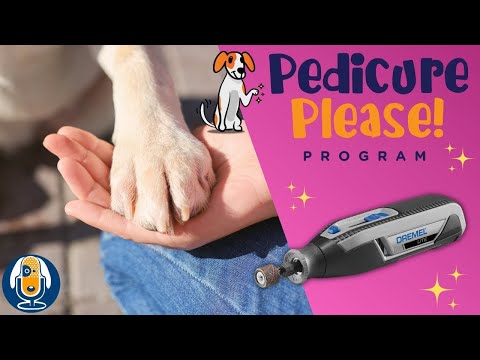
Dog Nail Care: Cooperative Training & Stop Signals Guide
Turn nail trims from a dreaded wrestling match into voluntary cooperative care. Learn how chin-rest consent cues, stop signals, and gradual desensitization keep your dog relaxed and safe.

EPUB Library Loans: Formats, DRM and Accessibility
Borrowing digital library books often means running into mysterious .acsm files, DRM authorizations, and e-reader sync headaches. TuTu breaks down how EPUB loans work, from Adobe Digital Editions to Libby accessibility tools.

Roman Concrete: Lime Clasts and Self-Healing Claims
Investigating the material science behind ancient Roman concrete, examining MIT's lime clast discovery, hot mixing thermodynamics, and what laboratory tests actually prove about crack self-healing.
That’s this batch. More to explore another time.
This topic is AI-assisted and human-edited, and may contain errors or bias. If you own a featured video and do not want it displayed, please contact us.