
Deep Sea Sound Mystery: NOAA Bloop Audio & Icequake Truth
Louder than any living creature and heard across an entire ocean! TuTu dives into the archives of the 1997 NOAA Bloop and uncovers the real science behind the abyss.
Topic guide
An Ocean-Spanning Roar from the Darkest Abyss
In the summer of 1997, deep-sea hydrophone arrays operated by the U.S. National Oceanic and Atmospheric Administration (NOAA) picked up an anomaly that stunned marine acousticians. Spanning more than 5,000 kilometers across the remote South Pacific, the signal—an ultra-low-frequency rumble that rose rapidly in pitch over several minutes—was louder than any known biological vocalization. When researchers accelerated the recording to audible human frequencies, it produced an eerie, hollow gulp, forever earning the moniker "The Bloop"🌊✨
Because the sound was significantly louder than a blue whale—the largest living animal on Earth—the internet immediately erupted with wild speculations. Science fiction fans noted with genuine chills that the triangulated coordinates placed the origin point unsettlingly close to H.P. Lovecraft’s fictional sunken city of R'lyeh, sparking theories of gargantuan undiscovered leviathans slumbering in the oceanic trenches👀💡
Deciphering the Spectrogram: From Sea Monsters to Glacial Icequakes
For over a decade, scientists at NOAA's Pacific Marine Environmental Laboratory analyzed the spectrogram data, comparing the frequency curves with naval sonar databases and marine mammal bioacoustics. The puzzle began unraveling as seismologists placed autonomous acoustic sensors around the Antarctic Peninsula and the Scotia Sea.
The breakthrough came when glaciologists correlated the Bloop's unique frequency signature with colossal cryoseisms, or icequakes—the cataclysmic fracturing and calving of massive Antarctic ice sheets. When an iceberg the size of a small island cracks, scrapes along the continental shelf, and shears into the ocean, it unleashes seismic acoustic energy capable of reverberating across entire ocean basins. TuTu dives into the declassified naval hydrophone archives and acoustic analyses to unpack how modern geophysics solved one of the sea's greatest acoustic mysteries🔍
🐰 Quick Mystery Quiz!
- Question: Why did the original Bloop audio sound so sharp and liquid-like when played on news broadcasts?
- A) It was recorded using an experimental underwater hydrophone designed specifically for bubbling fluids
- B) NOAA scientists sped up the raw recording by 16 times so its ultra-low frequencies could be heard by human ears
- C) Deep-sea hydrothermal vents release pressurized methane bubbles that pop violently at the surface
(Curious about how sound travels through the deep-ocean SOFAR channel? Check out the documentary clips below to investigate the evidence!💡)
🎬 The 1997 Detection and Initial Cryptid Theories
The Ocean's Loudest Sound: Tracing the 1997 Pacific Hydrophone Anomaly
Concerning Reality delivers an engaging investigative overview of the 1997 South Pacific acoustic anomaly. At 02:35, the video illustrates how the sound was picked up by listening stations over 3,000 miles apart, ruling out conventional marine life. The host breaks down the physics of sound transmission in the SOFAR channel, clearly establishing why a biological creature of that scale would be biologically impossible.
Expand reference video (YouTube)
Spectrogram Forensics: Why Speeding Up the Audio Created a Monster
The Unseen Files breaks down the timeline of the Bloop's discovery and its explosion in online pop culture. Key highlight at 03:10 compares the acoustic spectrogram of the Bloop against vocalizations from blue whales and sperm whale clicks. The documentary contextualizes how the 16x audio speedup created an organic gulping impression that fueled cryptid theories for over a decade.
Expand reference video (YouTube)
🎬 NOAA Hydrophone Arrays & Acoustic Analysis
Cold War Listening Posts: How Military Hydrophones Caught the Sound
Documentarian Ivan Rossouw delves into the military origins of the hydrophone networks that captured the mysterious sound. Starting at 04:15, he details how Cold War submarine surveillance arrays known as SOSUS were repurposed by NOAA for marine environmental monitoring. His comprehensive archival analysis illustrates how multi-sensor triangulation pinpointed the sound's origin off the remote southern Chilean coast.
Expand reference video (YouTube)
Unexplained Sea Signals: Comparing the Bloop with Upsweep and Julia
Real Mystery Files focuses on the forensic acoustics behind deep-sea sound tracking. At 03:50, the narrator contrasts the Bloop's spectrogram against other famous NOAA unexplained ocean sounds, including Upsweep, Julia, and Train. The visual frequency graphs demonstrate why early researchers initially hesitated between seismic activity and organic origins before multi-year monitoring provided matching geological profiles.
Expand reference video (YouTube)
The Antarctic Connection: Correlating Acoustic Spikes with Cryoseisms
TheUnknownFiles examines the turning point in the investigation when Antarctic seismology arrays were deployed. At 02:40, the video explains how glaciological sensors placed near the Bransfield Strait recorded identical acoustic profiles during massive iceberg calving events. It provides a grounded scientific breakdown of how thermal stress and ice shelf fracturing generate tremendous low-frequency acoustic energy across oceans.
Expand reference video (YouTube)
🎬 Antarctic Icequakes and the Scientific Verdict
The Mechanics of Icequakes: Massive Calving Energy Without Surface Waves
ExaMind investigates the physics of underwater icequakes and seismic wave propagation. Crucial section at 03:25 illustrates how an iceberg scraping the sea floor generates massive broad-spectrum acoustic resonance without creating surface tsunamis. The detailed animations make it easy to grasp why cryoseisms easily dwarf the sound output of even the largest marine mammals without requiring mythical monsters.
Expand reference video (YouTube)
Scientific Resolution: How Iceberg A-53a Solved a Decades-Old Mystery
Sleepy Curiosity provides a reflective, methodical narrative exploring how the ocean retains its capacity for wonder even when mysteries are solved. At 04:50, the creator explores NOAA seismologist Robert Dziak's conclusive findings on iceberg A-53a. The calm breakdown demonstrates how scientific discovery often reveals natural phenomena that are far more awe-inspiring than fictional sea creatures.
Expand reference video (YouTube)
More Picks Ready for You
TuTu Dug Up 4 More Related Videos
+4
The Bloop: What Really Made This Ocean Sound?
Scientists FINALLY Revealed What Made The 'Bloop' Sound
The Bloop: A Sound Heard Across the Pacific Ocean | ARCHIVE 001
The Bloop: The Ocean’s Loudest Mystery Explained!
Keep exploring

Fingerprint Evidence: Error Rates and Human Judgement
How do forensic examiners compare partial crime-scene fingerprints, and where can human judgment introduce error? Join TuTu to explore the ACE-V framework, black-box false-positive rates, cognitive bias, and the 2004 Brandon Mayfield misidentification.

Roman Concrete: Lime Clasts and Self-Healing Claims
Investigating the material science behind ancient Roman concrete, examining MIT's lime clast discovery, hot mixing thermodynamics, and what laboratory tests actually prove about crack self-healing.

Vasa's Capsize: Stability and Surviving Records
Vasa's 1628 sinking is explored through its stability trial, cannon layout, ballast constraints and surviving records. The collection connects the capsize account with later salvage and engineering research.
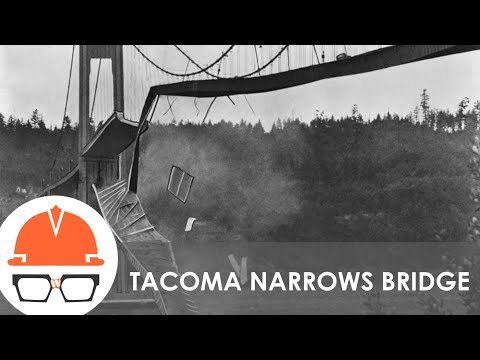
Tacoma Narrows Bridge Collapse: Flutter, Torsion & Wind Myths
Explore videos about the 1940 Tacoma Narrows Bridge collapse with TuTu. The collection brings together explanations of torsion, wind, resonance, and aeroelastic flutter for a closer look at how the event is described.
That’s this batch. More to explore another time.
This topic is AI-assisted and human-edited, and may contain errors or bias. If you own a featured video and do not want it displayed, please contact us.