
Cicada 3301: The Unsolved Internet Cryptography Puzzle 🕵️
Steganography, phone booths, GPS street coordinates, and unbroken runes! Dive into the unsolved mystery of Cicada 3301 with TuTu! 🕵️♂️✨
Topic guide
The Image That Broke the Internet: A Digital Rabbit Hole Begins
On January 4, 2012, an unassuming image was posted to an anonymous internet bulletin board. White text set against a stark black background delivered a chillingly formal invitation: "Hello. We are looking for highly intelligent individuals. To find them, we have devised a test." What began as an apparent piece of dark-web trivia quickly evolved into a widely discussed cryptographic scavenger hunt. The group, known only as Cicada 3301, did not rely on simple word games or trivial riddles. Instead, they wielded advanced mathematics, classical literature, steganography, obscure Maya numerology, and military-grade PGP cryptographic keys. 🕵️♂️📜✨
Before we fall down this rabbit hole, here is a quick blindspot quiz from TuTu: 💡 When Cicada 3301 launched their second puzzle in 2013, the clues suddenly escaped the digital screen and landed in the real world. GPS coordinates pointed to fourteen physical telephone poles scattered across five nations—from Warsaw to Sydney to Seattle. What was taped to those poles? Printed flyers bearing a black-and-white cicada emblem and a QR code! But when solvers reached the end of the 2014 puzzle, what legendary artifact were they handed that remains largely uncracked to this day? It is the Liber Primus—a 73-page book written entirely in an Anglo-Saxon runic cipher! Discover how solvers cracked the first 17 pages in video 5 at 03:20! 👀🧩
Cypherpunks, Secret Societies, and the Unbroken Runes of Liber Primus
Investigating the Cicada 3301 phenomenon requires navigating three distinct chapters of internet lore.
First, the mechanics of cryptographic verification. In an online world plagued by trolls and copycats, Cicada authenticated every clue with a 7A35090F PGP digital signature. Solvers had to extract invisible digital data hidden within image files using OutGuess, decode King James Bible book ciphers, and call an actual phone number in Texas that played an eerie robotic voicemail message with musical chords hiding yet another cipher.
Second, the riddle of the organizers' true identity. Was Cicada an elite recruitment front for government intelligence agencies like the NSA, CIA, or GCHQ seeking unconventional cryptanalysts? Or was it an underground cypherpunk collective building decentralized, privacy-focused communications networks to resist mass surveillance? When verified solver Marcus Wanner was granted access to a private Tor darknet forum, the group claimed to be an independent think tank dedicated to digital privacy and encryption.
Third, the lingering silence and the unsolved pages. Following a final brief message in 2014 reminding researchers to beware of false paths, Cicada went silent. Of the 73 pages of the Liber Primus, 58 pages remain completely undecrypted despite a decade of crowd-sourced supercomputing efforts. TuTu has collected documentaries and cryptographic explanations that compare the clues, interpretations, and unresolved questions. 🔍🌲
🎬 The 2012 & 2013 Puzzles: Steganography, GPS Coordinates & Street Clues
LEMMiNO: The Genesis of Cicada 3301 — From 4chan to Global GPS Clues
Over 40 million views. Swedish documentarian LEMMiNO delivers the definitive timeline of the 2012 and 2013 puzzles, meticulously tracking how digital steganography hidden in JPEG files led to physical posters across five continents.
Expand reference video (YouTube)
The Why Files: The PGP Cryptographic Signature and Dark Web Onion Gates
AJ and Hecklefish examine the cryptographic rigor of Cicada's PGP key verification, dissecting the mathematical safeguards that separated authentic clues from online impostors during the dark-web onion portal stage.
Expand reference video (YouTube)
Great Big Story: Inside the Mind of a Solver — Marcus Wanner's Story
A rare first-person interview with Marcus Wanner, one of the few confirmed individuals who solved the 2012 puzzle, revealing what happened inside the private darknet chatroom and the nature of the group's mission.
Expand reference video (YouTube)
🎬 Cryptographic Mechanics: Book Codes, Runes & The Undecrypted Liber Primus
TheBraveZombies: The Cryptographic Mechanics — Steganography, Caesar Ciphers & Maya Numerals
An intricate codebreaker tutorial walking through the step-by-step mathematical logic used to solve each stage, from OutGuess metadata extraction to prime number factoring and William Gibson book ciphers.
Expand reference video (YouTube)
CicadaCast: The Liber Primus Enigma — Runes, Gematria & 58 Unsolved Pages
Dedicated codebreakers examine the mysterious 2014 Liber Primus manuscript, exploring the Gematria Primus runic substitution alphabet and explaining why 58 pages remain uncracked despite global crowdsourcing.
Expand reference video (YouTube)
🎬 Theories & Legacy: Intelligence Recruiters, Cypherpunks & The Vanishing
Decoding the Unknown: Who Was Behind It? Intelligence Agency vs Cypherpunk Collective
Simon Whistler rigorously weighs the leading origin theories: assessing whether the puzzles were a stealth recruitment pipeline for intelligence services or an ideological cabal developing non-commercial privacy software.
Expand reference video (YouTube)
Zem TV: The Aftermath and Legacy — Why Cicada Went Dark After 2014
Analyzes the abrupt disappearance of the group following the leak of their private communications, reviewing their final verified PGP warning and their profound influence on internet culture and cybersecurity.
Expand reference video (YouTube)
More Picks Ready for You
TuTu Dug Up 3 More Related Videos
+3
Keep exploring

Fingerprint Evidence: Error Rates and Human Judgement
How do forensic examiners compare partial crime-scene fingerprints, and where can human judgment introduce error? Join TuTu to explore the ACE-V framework, black-box false-positive rates, cognitive bias, and the 2004 Brandon Mayfield misidentification.

Roman Concrete: Lime Clasts and Self-Healing Claims
Investigating the material science behind ancient Roman concrete, examining MIT's lime clast discovery, hot mixing thermodynamics, and what laboratory tests actually prove about crack self-healing.

Vasa's Capsize: Stability and Surviving Records
Vasa's 1628 sinking is explored through its stability trial, cannon layout, ballast constraints and surviving records. The collection connects the capsize account with later salvage and engineering research.
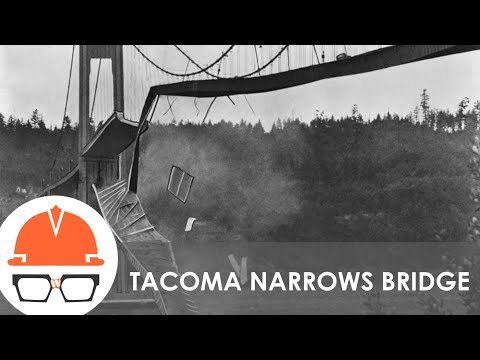
Tacoma Narrows Bridge Collapse: Flutter, Torsion & Wind Myths
Explore videos about the 1940 Tacoma Narrows Bridge collapse with TuTu. The collection brings together explanations of torsion, wind, resonance, and aeroelastic flutter for a closer look at how the event is described.
That’s this batch. More to explore another time.
This topic is AI-assisted and human-edited, and may contain errors or bias. If you own a featured video and do not want it displayed, please contact us.