
Job Interview Guide: STAR Method & Salary Negotiation Tips
Anxious about tough behavioral questions? Discover how top candidates use the STAR framework and strategic counter-offers to win high-paying jobs.
STAR Method Mastery
CareerVidz: Pass Behavioral Interviews with STAR
Over 1.6 million views! Richard McMunn breaks down high-scoring STAR answers to tough behavioral interview questions.
CareerVidz: Master Behavioral Questions Step-by-Step
Nearly 1 million views! In-depth breakdowns of situational questions, demonstrating how to articulate results with clarity and impact.
Storytelling & Salary
Jeff Su: Structure a Winning "About Yourself" Answer
Over 1.2 million views! The definitive guide to acing the most common icebreaker question using the Present-Past-Future framework.
Jeff Su: 5 Practical Rules for Salary Negotiation
Almost 900k views! Tactical scripts and email templates to counter-offer confidently without risking your relationship with the employer.

TuTu is still digging…
Interview scheduled for next week? Practice out loud in front of a mirror or camera to refine your concise, metrics-driven stories.
Editorial Deep-Dive & Key Takeaways
Navigating a job interview and negotiating compensation can be one of the most high-stakes challenges in your professional career. Whether you are interviewing for an entry-level role or a senior leadership position, success comes down to structured storytelling and tactical communication.
Mastering Behavioral Questions with the STAR Method
Hiring managers consistently rely on behavioral questions (“Tell me about a time when…”) because past performance is the best predictor of future behavior. The STAR technique provides an ironclad framework to structure your responses:
- Situation: Set the stage concisely. Describe the context, company environment, or specific hurdle you faced.
- Task: Define your explicit responsibility and the clear objective you were accountable for achieving.
- Action: Highlight the specific steps you personally took. Use active verbs and explain your thought process and collaboration.
- Result: Quantify the outcome with concrete metrics (e.g., increased revenue by 22%, reduced latency by 35%, or resolved conflict within 48 hours).
Perfecting the “Tell Me About Yourself” Opening
The first two minutes set the psychological tone for the entire conversation. Avoid reciting your chronological resume. Instead, adopt the Present-Past-Future framework:
- Present: Briefly summarize your current role and your primary area of expertise.
- Past: Highlight 1–2 relevant past milestones that prove your domain competence.
- Future: Connect your aspirations directly to how you can solve the specific problem this new role addresses.
High-Leverage Salary Negotiation Strategies
Once an offer is extended, the dynamic shifts in your favor. Never accept the initial verbal number on the spot. Express enthusiastic gratitude, request the full offer details in writing, and ask for 48 to 72 hours to evaluate the package.
When counter-offering, anchor your proposal in objective market data rather than personal living expenses. Consider the total compensation package—including base salary, performance bonuses, equity grants, flexible remote days, and signing bonuses.
Keep exploring
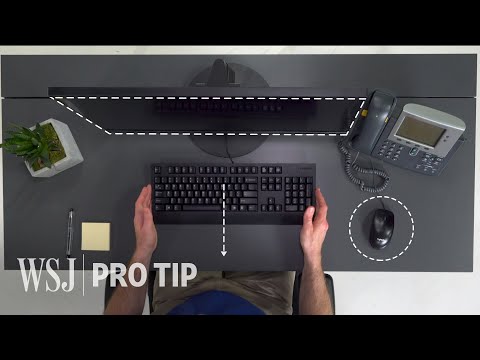
Ergonomic Desk Setup & Cable Management Guide
Master your ergonomic workspace! In-depth guide on desk and chair alignment, standing desk movement workflows, and clean cable routing solutions.

AI Agents at Work: What Humans Must Still Check
Choose bounded jobs for AI agents, limit permissions, verify outputs and keep human approval for actions involving money, people, private data or public communication.

Smart AI Work Habits That Save Real Time
Cut routine admin tasks with practical AI habits. Learn reusable prompt patterns and safe workflows for busy professionals to save hours.
You've reached TuTu's bottom line~
This topic is AI-assisted and human-edited, and may contain errors or bias. If you own a featured video and do not want it displayed, please contact us.