
Adult ADHD Hacks: Executive Function & Time Blindness 🧠
Struggling with task paralysis and brain fog? Discover clinical neuroscience, dopamine management, and practical ADHD accommodations with TuTu! 🧠✨
Topic guide
Beyond the Stigma of Laziness: The True Neuroscience of Executive Dysfunction
For millions of adults, navigating modern life feels like driving a Ferrari with bicycle brakes. You sit down at your desk with every intention of finishing a crucial work report or paying an overdue bill, only to find yourself three hours later organizing kitchen drawers, falling down a Wikipedia rabbit hole, or staring blankly at your screen in a state of paralyzing overwhelm. Society frequently mislabels these struggles as moral failings—calling people with ADHD "lazy," "careless," or "unmotivated." But clinical psychology and neuroscience tell a fundamentally different story. ADHD is not a deficit of intelligence, character, or willpower; it is a structural, neurochemical disorder of the brain's executive function system. 🧠⚡
Before we re-engineer our daily routines, here is a quick blindspot quiz from TuTu: 💡 Why does someone with ADHD struggle for three days to write a two-sentence email, but can effortlessly stay awake until 4 AM coding an entire website or researching obscure 19th-century naval history? It's not hypocrisy—it is the nature of dopamine! The ADHD brain has lower baseline levels of tonic dopamine in the prefrontal cortex, meaning routine tasks generate near-zero neural stimulation. But when a task is novel, urgent, interesting, or challenging, dopamine surges, unlocking intense hyperfocus. As legendary clinical authority Dr. Russell Barkley explains in video 1 at 04:15, ADHD is not a knowledge deficit—it is a point-of-performance execution problem! 👀✨
Conquering Time Blindness, Waiting Mode, and Task Paralysis
Building an ADHD-friendly lifestyle does not mean trying to force your neurodivergent brain into rigid neurotypical planners that inevitably end up abandoned in a drawer. It requires building externalized scaffolds that work with your brain's unique wiring.
First, dismantle "Time Blindness." Traditional clocks with numbers fail because to an ADHD mind, there are essentially only two zones of time: "Now" and "Not Now." By introducing physical analog countdown tools like the Time Timer, passing time becomes an external, visual slice that you can physically watch diminish, creating natural, calm urgency without adrenaline-fueled panic.
Second, escape the debilitating trap of "Waiting Mode." When an ADHD brain has an appointment scheduled at 3 PM, working memory treats that future event as an active, high-priority background process, effectively freezing the entire morning. Learning to lower activation energy by breaking tasks into absurdly tiny five-minute micro-actions prevents the brain's amygdala from triggering avoidance paralysis.
Third, replace shame with strategic accommodations. Incorporate "body doubling" (working alongside a friend or virtual co-working partner), externalize your to-do lists on whiteboards right in your line of sight, and create visual reminders at the exact point of performance. TuTu has collected videos discussing ADHD and everyday accommodations, with different explanations and lived-experience perspectives to compare. 🛠️🌱
🎬 The Neurobiology of ADHD: Executive Dysfunction & Performance Deficits
Dr. Russell Barkley: The Neuroanatomy of ADHD — A Disorder of Performance, Not Knowledge
Clinical psychologist Dr. Russell Barkley delivers his landmark lecture unpacking ADHD as a neurodevelopmental deficit in the executive function system. At 04:15, he explains why people with ADHD know what to do, but cannot do what they know, emphasizing that treatment must alter the physical point of performance rather than relying on internal willpower.
Expand reference video (YouTube)
How to ADHD: What is Executive Function and Why Does Your Brain Freeze?
Jessica McCabe breaks down the seven primary executive functions—working memory, emotional regulation, task initiation, and cognitive flexibility. At 01:40, she illustrates the brain's executive control tower, providing relatable animations showing why everyday multi-step chores trigger overwhelming paralysis and mental roadblocks.
Expand reference video (YouTube)
Dr. Andrew Huberman: Dopamine Circuits, Hyperfocus & Neural Attention Networks
Neurobiologist Dr. Andrew Huberman explores the prefrontal cortex-striatum dopamine loops that govern attention. At 08:30, he explains the paradox of ADHD hyperfocus, detailing how low baseline tonic dopamine leads to restless novelty-seeking, and shares evidence-based behavioral protocols to stabilize baseline dopamine.
Expand reference video (YouTube)
🎬 Overcoming Inertia: Waiting Mode, Dopamine Seeking & The Shame Cycle
HealthyGamerGG: The 'Waiting Mode' Trap — Why ADHD Freezes Before Appointments
Psychiatrist Dr. Alok Kanojia (Dr. K) deconstructs the debilitating phenomenon of 'waiting mode,' where having a 3 PM dentist appointment paralyzes the entire morning. At 05:20, he explains how working memory overload prevents task transitions and outlines cognitive strategies to unfreeze action.
Expand reference video (YouTube)
Jessica McCabe at TEDx: Failing at Normal — Rebuilding Self-Esteem & Accommodations
In this viral talk viewed over seven million times, Jessica McCabe recounts decades of internalized shame and academic struggles before her diagnosis. At 06:50, she delivers an impassioned plea to stop judging neurodivergent minds against neurotypical standards and build personalized environmental scaffolds.
Expand reference video (YouTube)
🎬 Actionable Accommodations: Visual Timers, Friction Reduction & Micro-Steps
How to ADHD: Visual Timers & Externalizing Time Horizons #Shorts
A rapid 43-second demonstration showing why standard digital clocks fail ADHD minds and how physical analog countdown timers (like the Time Timer) transform invisible passing time into a concrete, disappearing visual slice that defeats time blindness.
Expand reference video (YouTube)
HealthyGamerGG: Lowering Activation Energy & The 5-Minute Rule #Shorts
Dr. K outlines the concept of cognitive friction in under 90 seconds, teaching viewers how to break daunting projects down into micro-actions so small that the amygdala does not trigger avoidance behavior.
Expand reference video (YouTube)
More Picks Ready for You
TuTu Dug Up 5 More Related Videos
+5
Improve Your Baseline Dopamine for Motivation & Drive | Dr. Andrew Huberman
Does ADHD Feel Like A Curse? Do this.
ADHD and Executive Function - Dr. Russell Barkley | Child Mind Institute
How to (Actually) Get Out the Door on Time
ADHD is a Motivation Deficit Disorder
Keep exploring
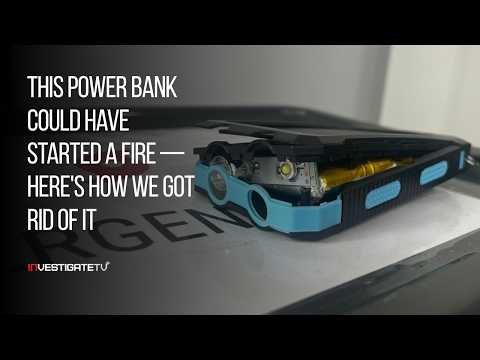
US Battery Recycling: Damaged Cells Need Different Care
Join TuTu to separate standard US battery recycling drop-offs from swollen or damaged lithium-ion cell protocols: taping terminals, isolating bloated packs in non-flammable containers, and checking county Household Hazardous Waste (HHW) rules.

Roommate Guests: Agree on Notice and Shared Space
Set clear roommate expectations for daytime visitors, overnight guest limits, advance notice, and shared kitchen or bathroom boundaries with TuTu.

Dried Beans: Soaking, Pressure Cooking and Safety
Compare dried bean preparation rules across varieties and appliances: overnight salt brining vs. no-soak pressure cooking, natural steam release to prevent burst skins, and why raw red kidney beans require full boiling before slow cooking.

Amtrak With Large Bags: Luggage Rules & Storage Guide
Wondering how to manage oversized suitcases on train journeys? Discover where large bags fit on Amtrak coach cars, route-by-route checked baggage rules, and Red Cap station transfer tips.
That’s this batch. More to explore another time.
This topic is AI-assisted and human-edited, and may contain errors or bias. If you own a featured video and do not want it displayed, please contact us.