
Beginner Running Form Guide: Cadence & Injury Prevention
Tired of shin splints, runner's knee, and heavy legs? Top running physios and coaches reveal how simple cadence and footstrike adjustments unlock effortless, injury-free miles.
Topic guide
The Biomechanical Paradox: Why Running Harder Leads to Breakdown
Running is universally celebrated as the most democratic and instinctual form of human exercise. All you need is a pair of trainers and an open road. Yet for hundreds of thousands of beginners who embark on Couch-to-5K programs or eagerly sign up for their first half-marathon, running quickly turns from an empowering habit into an agonizing gauntlet of chronic injuries. Clinical sports medicine statistics reveal that up to 70% of recreational runners suffer an overuse injury every year—most commonly medial tibial stress syndrome (shin splints), patellofemoral pain (runner's knee), plantar fasciitis, and Achilles tendinopathy.
The underlying tragedy is that modern sedentary lifestyle patterns—prolonged chair sitting, slouched desk posture, and weak posterior chains—are diametrically opposed to the demands of athletic locomotion. When novice runners lace up and attempt to run purely through cardiovascular willpower, their bodies unconsciously revert to inefficient compensatory patterns. Instead of gliding forward as elastic, spring-like organisms, they slam into the concrete with rigid, outstretched legs, creating massive ground reaction braking forces that reverberate straight into their shin bones and kneecaps. Understanding and refining your running form is not an aesthetic luxury reserved for elite Olympic track athletes; it is an absolute biological necessity for anyone who wants to run pain-free for decades. Join TuTu in comparing the biomechanical explanations presented in these videos! 🐰✨
Cadence, Footstrike, and Postural Lean: The Trinity of Sustainable Form
Mastering efficient running biomechanics does not require re-engineering every muscle twitch. Rather, evidence-based sports physical therapy centers on three interdependent foundational principles:
- Step Rate (Cadence) Over Stride Length: The single most common technical error among beginners is overstriding—reaching the lead foot too far ahead of the body. When your heel contacts the ground ahead of your center of mass with a fully locked knee, it acts as a mechanical emergency brake, sending peak impact forces into your skeletal joints. Increasing your cadence—taking shorter, lighter, quicker steps (aiming for roughly 170 to 180 steps per minute)—mechanically forces your foot to touch down directly under your center of gravity, virtually eliminating braking shocks.
- Whole-Body Forward Lean From the Ankles: Efficient runners utilize gravity as free propulsion. Instead of bending forward at the waist (which collapses the diaphragm and disengages the glutes), proper running lean originates from the ankles while maintaining a proud, tall chest and neutral pelvis. This slight forward tilt encourages a natural midfoot landing, allowing your arch and calf musculature to act as natural shock-absorbing leaf springs.
- Targeted Posterior Chain Pre-Hab: Running is a continuous series of single-leg hops. Without active hip extension powered by strong gluteus maximus and medius muscles, the quad and lower leg are forced to absorb unsustainable shearing loads. Integrating simple pre-run activation drills—such as glute bridges, A-skips, and tibialis raises—is presented as one approach to preparing for running. TuTu has collected running videos with different explanations of form, cadence, and preparation drills. 💡
🎬 Postural Alignment & Step Rate: Tall Posture, Forward Lean and Cadence
Global Triathlon Network: Full-Body Biomechanics & Running Posture Explained
GTN coaches break down complete kinetic chain mechanics: keeping eyes forward, activating core engagement, maintaining a tall spine, and utilizing arm drive to balance lower body torque.
Expand reference video (YouTube)
James Dunne: The Truth About 180 SPM Cadence & Stride Rate Optimization
Running rehabilitation specialist James Dunne demystifies the 180 spm rule, explaining how increasing your step frequency by 5-10% naturally reduces impact shock on knees and hips.
Expand reference video (YouTube)
🎬 Footstrike & Stride Optimization: Eliminating Overstriding and Braking Forces
The Run Experience: Eliminating Overstriding & Midfoot Landing Mechanics
Nate Helming demonstrates why landing with your foot beneath your center of mass matters far more than obsessing over heel vs. forefoot strike, eliminating harsh braking forces.
Expand reference video (YouTube)
The Run Experience: 5-Minute Glute Activation & Hip Extension Drill
A targeted 5-minute pre-run routine to wake up sleepy glutes and hamstrings, helping runners pull their heels through the gait cycle rather than dragging feet along the pavement.
Expand reference video (YouTube)
Nicklas Rossner: 10-Minute Visual Blueprint for Effortless Running Form
An accessible, visually intuitive breakdown of forward lean originating from the ankles, relaxed shoulder positioning, and rhythmic breathing patterns for new distance runners.
Expand reference video (YouTube)
🎬 Injury Prevention & Bulletproofing: Shin Splints, Knee Pain & Mobility Drills
Squat University: Dr. Aaron Horschig on Shin Splints & Tibialis Loading
Dr. Aaron Horschig explains the root biomechanical causes of medial tibial stress syndrome (shin splints) and demonstrates isometric tibialis raises to fortify lower leg resilience.
Expand reference video (YouTube)
The Run Experience: Head-to-Toe Checklist for Injury-Free Miles
A comprehensive head-to-toe diagnostic checklist for beginners, covering jaw relaxation, compact elbow swings, pelvic neutrality, and soft knee bend at ground contact.
Expand reference video (YouTube)
More Picks Ready for You
TuTu Dug Up 6 More Related Videos
+6
Run Faster with LESS Effort by Fixing This Simple Mistake
Shin Splints | Fix Shin Pain From Running
Has It Already Started? | Stop Shin Splints and Keep Running!
How to Do A-Skip - B-Skip with Proper Form- Find Your Stride with Coach John Smith
PERFECT RUNNING FORM - 3 Easy Ways PRO Runners Run Faster
Is My Running Cadence Causing INJURY?
Keep exploring
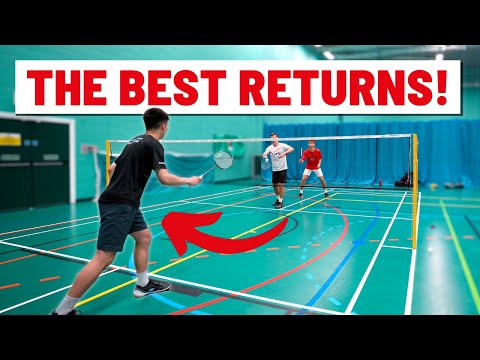
Badminton Doubles: Serve Returns and Court Coverage
A tactical guide breaking down high-percentage doubles serve returns, reading server habits, and seamless court rotation between front-and-back attack and side-by-side defense.

Indoor Cycling Rollers: Mounting, Balance and Space
Indoor cycling rollers through beginner setup, mounting, balance and room positioning. The collection compares doorway support, cadence and progression drills, with attention to how rollers differ from fixed trainers.

Autumn Rain Layers: Shell Venting and Damp Clothing Guide
Learn how to regulate body temperature and moisture during wet autumn hikes. Discover practical pit-zip venting techniques, base-layer moisture transfer, and damp gear drying strategies.

Orienteering Maps: Contours, Bearings and Smart Route Choice
Join TuTu to explore orienteering-map videos on contour lines, map setting, compass bearings, and route choice. Compare how each example connects features on the map with decisions on the ground.
That’s this batch. More to explore another time.
This topic is AI-assisted and human-edited, and may contain errors or bias. If you own a featured video and do not want it displayed, please contact us.