
Pickleball Beginner Guide: Rules, Serves, and Kitchen Play
Stepping onto the pickleball court for the first time? Master non-volley zone kitchen rules, legal underhand serves, and reset dinking strategies.
Topic guide
Pickleball has surged across community centers, public parks, and recreational leagues as one of the fastest-growing racquet sports in the world. Combining elements of tennis, badminton, and ping-pong, its smaller court dimensions make it instantly accessible to players of all ages and fitness levels. However, newcomers frequently find themselves confused by unique regulations like the two-bounce rule, unconventional three-number rally scoring, and the enigmatic Non-Volley Zone, colloquially known as the Kitchen.
To play confidently and avoid handing free points to your opponents, mastering the game requires understanding court positioning before raw power. Unlike tennis, where aggressive baseline groundstrokes dominate, pickleball rallies are won at the net through patience, precise ball placement, and soft dinking. By developing a consistent legal underhand serve and respecting the physical boundaries of the kitchen line, you can transition smoothly from nervous beginner to dependable doubles partner.
3 Golden Rules Every Pickleball Beginner Must Know
Key fundamentals to memorize before stepping up to the baseline:
- The Two-Bounce Rule:After the ball is served across the net, the receiving team must let it bounce before hitting it, and the serving team must also let the return bounce before playing it. Only after these initial two bounces can either side volley the ball out of the air.
- The Kitchen (Non-Volley Zone) Boundary:You cannot volley the ball (hit it in the air without letting it bounce) while standing inside the 7-foot kitchen zone or even touching the kitchen line. If your momentum carries you into the kitchen after hitting an airborne volley, it counts as an immediate fault.
- Legal Underhand Serving Mechanics:The paddle must make contact with the ball below your waistline with an upward arc motion, and the highest point of the paddle head must not exceed the top of your wrist at impact.
Court Positioning Strategy for Doubles Play
- Race to the Kitchen Line Together:The closer you and your partner are to the Non-Volley Zone line (toes just inches behind the stripe), the more offensive court angles you control.
- Master the Soft Dink Over Speed:When caught in high-speed net firefights, lowering your paddle angle and executing a gentle cross-court dink resets the point and forces opposing hitters into unforced errors.
🎬 Court Layout and Scoring: The Non-Volley Zone Kitchen Rules
The Complete Pickleball Playbook: Court Boundaries, Scoring, and Faults
A crystal-clear animated walkthrough explaining two-bounce requirements, side-out scoring sequences, and basic doubles rotation.
Expand reference video (YouTube)
Official Rules Breakdown: Serving Boxes, Line Calls, and Non-Volley Boundaries
The official standard primer on line markings, legal contact points, and common beginner foot faults at the kitchen edge.
Expand reference video (YouTube)
Serving Legality Check: Upward Arc, Paddle Position, and Drop Serve Rules
Breaks down subtle illegal serve motions that get called in tournaments and provides dependable legal alternatives.
Expand reference video (YouTube)
🎬 Core Mechanics and Shots: Underhand Serves and Controlled Dinks
Deep Serve Consistency: Target Zones and Stance Setup for High-Percentage Serves
Practical drills for placing the ball deep near the opponent baseline without risking unnecessary out-of-bounds errors.
Expand reference video (YouTube)
The Art of the Kitchen Dink: Push Dinks, Lift Dinks, and Reset Strategy
Teaches the golden principles of non-aggressive paddle grip tension and patient cross-court trajectory control.
Expand reference video (YouTube)
3 Rapid Dinking Fixes: Paddle Height and Soft Wrist Control Shorts
Bite-sized coaching tip pinpointing why beginners pop the ball too high and how to keep it skimming gracefully over the tape.
Expand reference video (YouTube)
TuTu is still digging…
Stay curious and keep exploring more practical insights with TuTu! ✨
Keep exploring
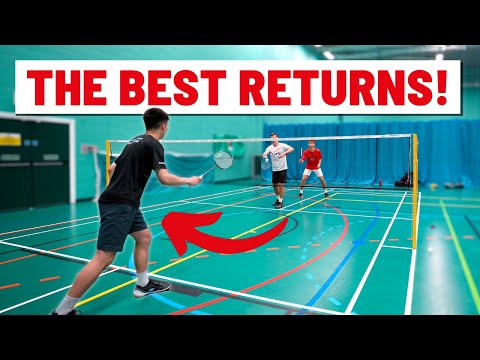
Badminton Doubles: Serve Returns and Court Coverage
A tactical guide breaking down high-percentage doubles serve returns, reading server habits, and seamless court rotation between front-and-back attack and side-by-side defense.

Indoor Cycling Rollers: Mounting, Balance and Space
Indoor cycling rollers through beginner setup, mounting, balance and room positioning. The collection compares doorway support, cadence and progression drills, with attention to how rollers differ from fixed trainers.

Autumn Rain Layers: Shell Venting and Damp Clothing Guide
Learn how to regulate body temperature and moisture during wet autumn hikes. Discover practical pit-zip venting techniques, base-layer moisture transfer, and damp gear drying strategies.

Orienteering Maps: Contours, Bearings and Smart Route Choice
Join TuTu to explore orienteering-map videos on contour lines, map setting, compass bearings, and route choice. Compare how each example connects features on the map with decisions on the ground.
That’s this batch. More to explore another time.
This topic is AI-assisted and human-edited, and may contain errors or bias. If you own a featured video and do not want it displayed, please contact us.