
Ghost Notes on Drums: Dynamics Before Speed
Ever notice how pro drummers make a simple beat feel like an absolute freight train of funk, while beginners just sound like pots and pans falling down the stairs?
Topic guide
Why Does Your Groove Sound Clunky Instead of Funky?
We’ve all had that moment behind the kit where we listen back to a rehearsal recording and wonder why our playing sounds so stiff and mechanical. You’re playing the exact same kick-snare-hat pattern as your favorite drummer on Spotify, your time is decently steady, but the groove just feels completely hollow. Then you watch a master like Bernard Purdie or Chad Smith, and their snare drum seems to be whispering continuous secret rhythms between the loud backbeats.
Those subtle, breath-like filler taps are ghost notes—and they are the ultimate secret sauce of drumming pocket. The biggest mistake most drummers make when trying to learn ghost notes is chasing speed first. They immediately try to play blazing-fast funk patterns or intricate linear fills, but because they haven't developed dynamic separation, their quiet notes come out way too loud. Instead of a mysterious, groovy hum beneath the beat, it sounds like an aggressive machine gun shootout.
The Physical Law of Stick Height: 12 Inches vs. 1 Inch
Clean drumming dynamics come down to one fundamental physical discipline: extreme stick height contrast.
Your main backbeats on beats 2 and 4 are full strokes—your stick travels roughly 10 to 12 inches off the snare head to deliver a punchy, resonant pop. Ghost notes, on the other hand, are delicate tap strokes where the bead of your drumstick should never rise more than 1 to 2 inches off the drumhead. That means your wrist has to drop into a completely relaxed, loose grip immediately after landing a massive rimshot, resisting the urge to let the rebound stick fly upward. This collection focuses on tutorials about touch, hand balance and separating quiet taps from louder backbeats.
🎬 Stick Height & Controlled Tap Mechanics
Eliminating Volume Creep: Stick Height and the Relaxed Grip
Rob Brown cuts straight to the chase about why ghost notes get sloppy. He breaks down the physical mechanics of keeping your stick barely hovering above the snare batter head, preventing your quiet notes from creeping up in volume.
Expand reference video (YouTube)
The Anatomy of a Tap: Downstrokes and Upstrokes Isolated
Mike Johnston provides a masterclass on stroke types, explaining how to execute a controlled downstroke on the loud accent so your hand is already primed at 1 inch for the following ghost note.
Expand reference video (YouTube)
Hearing the Texture: Understanding Felt Beats Over Heard Beats
A wonderfully clear conceptual breakdown for anyone wondering what ghost notes actually do in music. Mike demonstrates how ghost notes provide rhythmic glue and momentum without competing with the lead vocal or bassline.
Expand reference video (YouTube)
🎬 Groove Integration & Hand Independence
Step-by-Step Groove Construction: From Straight Time to Funky Pocket
Drumeo lays out a structured, 5-stage roadmap starting from a basic rock beat, progressively inserting single ghost notes on the off-beats, and building muscle memory before speeding up.
Expand reference video (YouTube)
Independence Training: Decoupling the Right Hand from the Left Hand
Focuses on the difficult neurological challenge of hand independence: keeping your hi-hat hand steady and dynamic while your snare hand alternates between heavy accents and whisper-quiet taps.
Expand reference video (YouTube)
Three Essential Tweaks: Snare Placement, Touch, and Tone
Practical, no-nonsense adjustments to your playing setup and touch. He explains how playing ghost notes slightly off-center on the snare drumhead produces a drier, crisper tone that blends into the groove.
Expand reference video (YouTube)
🎬 Diagnostic Fixes & Touch Refinement
Diagnostic Troubleshooting: Stopping Rushed 16th-Note Flams
Gabe Helguera tackles the most common beginner habit: rushing ghost notes so they sound like accidental flams against the hi-hat. His groove workout forces you to place each subdivision with intentional timing.
Expand reference video (YouTube)
Foundational Rudiment Drills: Accented Single Strokes on Pad
A gentle, zero-intimidation walkthrough designed for newer players. It strips away the drum kit entirely to focus on accented single-stroke rolls on a practice pad, building the fundamental reflex first.
Expand reference video (YouTube)
More Picks Ready for You
TuTu Dug Up 3 More Related Videos
+3
Keep exploring

Visible Denim Mending: Match the Repair to the Tear
Don't throw out your favorite blown-out jeans! TuTu rounds up expert sashiko, boro patching, and crotch darning techniques to reinforce structural stress points while turning fabric rips into wearable art.
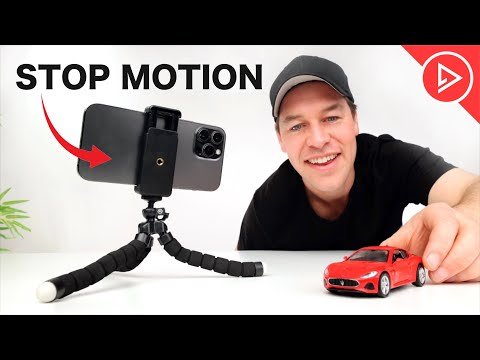
Phone Stop-Motion: Frame Rate, Onion Skinning and Rigging
Turn your smartphone into a miniature animation studio! Master camera lock-off, manual exposure, onion-skin alignment, optimal frame rates, and simple rig removal for smooth stop-motion.

Bonsai Basics: Nursery Stock, Akadama Soil & Repotting
Ready to start your first bonsai without accidentally killing it? Join TuTu for a beginner-friendly breakdown of garden center nursery stock selection, Akadama and pumice soil mixes, root pruning, and seasonal watering.

Bonsai Styling: Copper Wiring, Canopy Pads, Jin & Shari
Ready to transform healthy pre-bonsai stock into miniature ancient trees? Join TuTu for an advanced bonsai styling guide covering structural wiring, Shimpaku juniper canopy pads, and carving realistic Jin and Shari deadwood.
That’s this batch. More to explore another time.
This topic is AI-assisted and human-edited, and may contain errors or bias. If you own a featured video and do not want it displayed, please contact us.