
GLOBE Cloud Watching: Ground Reports & Satellite Matches
Turn your daily cloud-gazing into genuine NASA climate data with the GLOBE Observer app and satellite match tables.
Topic guide
Looking Up vs. Looking Down: Why NASA Needs Ground Observers
Whenever you look up at a cluster of puffy cumulus or wispy cirrus, you are seeing something orbiting satellites often struggle to fully capture. NASA has state-of-the-art instruments circling our planet—from Terra and Aqua to the new PACE mission—measuring solar radiation, aerosol layers, and cloud tops. But satellites only see clouds from above, looking down against the bright, reflective backdrop of land, snow, and oceans. They cannot see the cloud base, nor can they always resolve thin low-level stratus tucked underneath high cirrus layers.
That is where ground citizen scientists step in. Through the GLOBE Observer app, everyday observers record sky cover, cloud types, and surface conditions right from the ground. When your ground observation aligns with a satellite flyover, NASA can stitch together a complete top-to-bottom atmospheric cross-section. It is genuine, collaborative Earth science that anyone with a smartphone can join—no telescope or weather station required. ✨☁️
Timing the Flyover, Taking Photos & Reading Your Match Table
Participating is wonderfully straightforward once you master a couple of practical habits. First, while you can submit an observation anytime, the most scientifically valuable data happens within a 15-minute window of a documented satellite overpass. The app calculates exact overpass times for your location, giving you a friendly heads-up before Terra, Aqua, or geostationary satellites scan your sky.
Second, taking cardinal photos (North, South, East, West, up, and down) gives researchers visual ground truth to compare against radiometric readings. And the coolest part? A few days later, NASA sends you an automated satellite match email with a side-by-side comparison table showing your ground report alongside satellite imagery of that exact location. TuTu rounded up walkthroughs from NASA Goddard, Langley, and seasoned educators so you can set up your account, nail your overpass timing, and understand the observation workflow.
🎬 App Setup and Cardinal Sky Photography
NASA Goddard: Getting Started with the GLOBE Observer Clouds Protocol
The official overview from NASA Goddard breaks down why ground observers are the missing puzzle piece in satellite validation. Highlights how photographing sky conditions from below provides the crucial perspective satellites lack.
Expand reference video (YouTube)
INFINITY Science Center: Step-by-Step App Walkthrough & Account Registration
Educator Steven Cruthirds provides a clear, practical onboarding guide for setting up your GLOBE Observer account, navigating the training tabs, and linking your profile to regional scientific partners.
Expand reference video (YouTube)
Citizen Science Walkthrough: Capturing Cardinal Photos & Submitting Sky Data
Demonstrates the essential phone-rotation technique required to capture aligned photos across all cardinal directions (North, South, East, West) and zenith, plus how to cache and submit stored observations.
Expand reference video (YouTube)
🎬 Satellite Overpass Timing and Match Tables
The GLOBE Program: Decoding Satellite Match Tables from NASA Langley
Explains the automated match tables that NASA Langley Research Center generates. Shows how ground logs of cloud cover and opacity are paired with satellite radiance measurements, including how to report local anomalies.
Expand reference video (YouTube)
NASA Goddard: Timing Ground Observations Within Satellite Flyover Windows
A punchy primer focused on the 15-minute overpass rule. Clarifies why scheduling sky observations around scheduled orbital passes maximizes scientific value for climate modeling.
Expand reference video (YouTube)
National Science Week: Reviewing Submitted Cloud Measurements & Global Datasets
Guides observers through the post-submission dashboard where you can inspect your historical cloud logs, examine observations submitted worldwide on the same day, and verify NASA sync status.
Expand reference video (YouTube)
🎬 Atmospheric Science and PACE Mission Validation
The GLOBE Program: Ground Truth Calibration for the PACE Satellite Mission
Recorded training webinar explaining how ground observers calibrate data for NASA's PACE mission. Dr. Andy Sayer explains how citizen reports help evaluate satellite measurements of cloud edges and aerosol boundaries.
Expand reference video (YouTube)
NASA Goddard: The Physics of Top-Down vs. Bottom-Up Cloud Monitoring
Explores the fundamental atmospheric physics behind cloud radiative forcing. Details why satellites orbiting high above Earth need ground-level data to resolve complex multi-tier cloud decks.
Expand reference video (YouTube)
More Picks Ready for You
TuTu Dug Up 3 More Related Videos
+3
Keep exploring

Visible Denim Mending: Match the Repair to the Tear
Don't throw out your favorite blown-out jeans! TuTu rounds up expert sashiko, boro patching, and crotch darning techniques to reinforce structural stress points while turning fabric rips into wearable art.
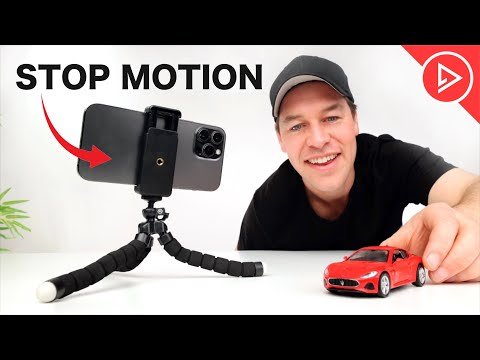
Phone Stop-Motion: Frame Rate, Onion Skinning and Rigging
Turn your smartphone into a miniature animation studio! Master camera lock-off, manual exposure, onion-skin alignment, optimal frame rates, and simple rig removal for smooth stop-motion.

Bonsai Basics: Nursery Stock, Akadama Soil & Repotting
Ready to start your first bonsai without accidentally killing it? Join TuTu for a beginner-friendly breakdown of garden center nursery stock selection, Akadama and pumice soil mixes, root pruning, and seasonal watering.

Bonsai Styling: Copper Wiring, Canopy Pads, Jin & Shari
Ready to transform healthy pre-bonsai stock into miniature ancient trees? Join TuTu for an advanced bonsai styling guide covering structural wiring, Shimpaku juniper canopy pads, and carving realistic Jin and Shari deadwood.
That’s this batch. More to explore another time.
This topic is AI-assisted and human-edited, and may contain errors or bias. If you own a featured video and do not want it displayed, please contact us.