
Global AI Copyright Lawsuits: Who Owns Training Data?
AI training, outputs and creators: compare the legal questions and the reporting behind the headlines.
Topic guide
AI copyright: separate the questions before taking sides
Who controls the creative work that an AI system learns from, and who controls what it produces? Those are related questions, but they are not the same dispute. The U.S. Copyright Office's AI project treats digital replicas, the copyrightability of outputs and generative AI training as distinct areas of study. This collection uses legal commentary and news reporting to help readers compare the arguments without presenting an allegation as a court's conclusion.
The video titles point to disputes involving image generation, journalism, authors and music. Some focus on a lawsuit being filed; others discuss broader legal questions or a creator's position. When watching, first identify the speaker and the type of source. A lawyer's explainer, a news interview and a party's public argument can all be useful, but each serves a different purpose. The date also matters: a report on a new filing is historical coverage of that moment, not proof of the case's current outcome.
A viewing route through law, journalism and creative work
Begin with LegalEagle's general legal discussion and image-generator case commentary. Move to the reporting about The New York Times, then compare the author and music-related reports. The final CBS video concerns Jason Isbell and other artists in a reported dispute involving Suno; it should not be described as reporting the same claim brought by record labels. Different claimants and different types of creative work need to be distinguished.
Use the collection to build questions for further reading: what work is alleged to have been copied, what conduct is challenged, and which claims or defenses are actually before a court? This guide does not say that every use of copyrighted material for training is lawful or unlawful. It does not announce a final outcome for any of the featured cases, or turn a commentator's interpretation into legal advice. Unverified chapter timestamps have been removed. Follow the linked official project and the relevant case documents when you need an updated account, while using these videos as a map of the public debate.
🎬 The Fair Use Battleground: Transformative Purpose vs Market Substitution
LegalEagle’s general AI-and-law explainer
LegalEagle’s general AI-and-law explainer. Use this dated commentary or report to identify the dispute and speaker; it does not establish the case’s current outcome.
Expand reference video (YouTube)
LegalEagle’s commentary on an image-generator lawsuit
LegalEagle’s commentary on an image-generator lawsuit. Use this dated commentary or report to identify the dispute and speaker; it does not establish the case’s current outcome.
Expand reference video (YouTube)
🎬 Journalism & Text Scraping: The New York Times v. OpenAI & Microsoft
NBC’s reporting on The New York Times lawsuit
NBC’s reporting on The New York Times lawsuit. Use this dated commentary or report to identify the dispute and speaker; it does not establish the case’s current outcome.
Expand reference video (YouTube)
Bloomberg’s reporting on the publisher dispute
Bloomberg’s reporting on the publisher dispute. Use this dated commentary or report to identify the dispute and speaker; it does not establish the case’s current outcome.
Expand reference video (YouTube)
🎬 Authors, Illustrators & Music: Creative Labor in the Age of Synthesis
Forbes’ author and congressional discussion
Forbes’ author and congressional discussion. Use this dated commentary or report to identify the dispute and speaker; it does not establish the case’s current outcome.
Expand reference video (YouTube)
Good Morning America’s reporting on authors
Good Morning America’s reporting on authors. Use this dated commentary or report to identify the dispute and speaker; it does not establish the case’s current outcome.
Expand reference video (YouTube)
CBS’ reporting on Jason Isbell, other artists and Suno
CBS’ reporting on Jason Isbell, other artists and Suno. Use this dated commentary or report to identify the dispute and speaker; it does not establish the case’s current outcome.
Expand reference video (YouTube)
More Picks Ready for You
TuTu Dug Up 4 More Related Videos
+4
Hollywood writers sue Meta and OpenAI for copyright infringement
AI Training on Copyrighted Data Is in Trouble
The Getty vs Stability AI ruling explained in 15 seconds
The New York Times vs. OpenAI Lawsuit Explained
Keep exploring
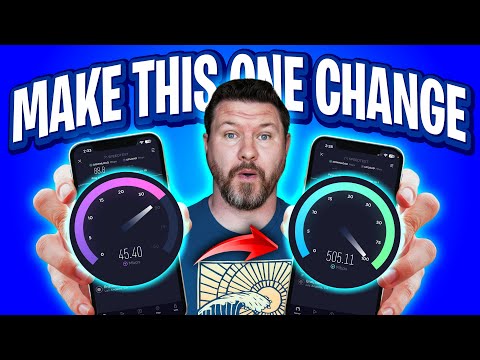
Mesh Wi-Fi Backhaul: Ethernet Ports and Slow Links
Wired your mesh Wi-Fi nodes with Ethernet but speeds are stuck around 90–100 Mbps? Join TuTu to trace port speeds, 8-wire Cat5e/Cat6 pinouts, switch loops, and negotiated link rates before buying another node.

US Flights With Power Banks: Packing and Airline Checks
Flying in the US with portable chargers or spare camera batteries? Join TuTu to separate FAA PackSafe watt-hour limits (100Wh vs. 160Wh), gate-checked bag traps, and airline-specific cabin storage rules.

iPhone Duo Display Cracking: Teardown, Dust & Warranty
Why are launch-week iPhone Duo inner displays cracking along the fold? Join TuTu to break down JerryRigEverything's durability test, iFixit's CT-scan teardown hotspot, sand ingress, case issues, and Apple's free replacement policy.

EPUB Library Loans: Formats, DRM and Accessibility
Borrowing digital library books often means running into mysterious .acsm files, DRM authorizations, and e-reader sync headaches. TuTu breaks down how EPUB loans work, from Adobe Digital Editions to Libby accessibility tools.
That’s this batch. More to explore another time.
This topic is AI-assisted and human-edited, and may contain errors or bias. If you own a featured video and do not want it displayed, please contact us.