
Paper Engineering: Pop-Up Folds That Close Flat
Learn how master paper engineers craft V-folds, parallel boxes, and compound lifters that pop open with dramatic height yet collapse completely flat inside your card.
Topic guide
The Core Mystery of Pop-Up Geometry: Why Do Some Folds Refuse to Close Flat?
Ever opened a mind-blowing pop-up book and wondered how on earth a towering castle or intricate dragon collapses into a completely flat sheet of paper without a single crushed corner? We have all tried gluing down a DIY paper shape only to watch the card stubbornly jam at a 45-degree angle or tear itself apart along the gutter. Real talk: pop-up paper engineering is not magic or pure guesswork—it is pure kinetic geometry. Join TuTu as we dive down the rabbit hole of basic paper mechanisms, focusing strictly on how paper hinges, tab placement, and fold clearances work together so your prototypes snap open dynamically and shut completely flush every single time.
At its heart, pop-up mechanics rely on two primary families of motion: angle folds (V-folds) and parallel folds (parallelograms and box mechanisms). When a V-fold straddles the central gutter of a base card, the angles between the fold line and the center crease dictate exactly how far the shape projects forward. If your angles are symmetrical, the mechanism swings symmetrically. But change the angle on one side, and you suddenly get dynamic asymmetrical rotation! The trick is respecting fold clearance: the distance from the pivot point to the outer edge of your pop-up element must never exceed the boundary of the folded card, otherwise your mechanism will poke out past the page trims when closed.
Parallel Boxes, Compound Risers, and Friction Clearance Without Tearout
Once you grasp single V-folds, stacking them into compound lifters and floating box platforms unlocks endless creative potential. Master paper engineers like Matthew Reinhart and Duncan Birmingham have spent decades refining foolproof cardboard mock-ups. By cutting simple test strips from cardstock, you can observe where mechanical friction occurs before applying permanent glue. A 90-degree box mechanism, for instance, requires that opposite sides remain strictly equal in length, while securing the base tabs at a clean 45-degree angle to the central fold line guarantees the box collapses flat onto the base sheet without pinching.
Paper grain direction and scoring depth are the unsung heroes here. Scoring on the mountain side of a fold compresses the fibers cleanly, preventing awkward buckling when paper layers fold into multiple tiers. If you enjoy hands-on tactile craft experiments and exploring the physical behavior of paper textures, definitely check out our Cyanotype Printing and UV Exposure Timing Guide as well. Grab your craft knife, bone folder, and cardstock—let's build mock-ups that move like clockwork!
🎬 Symmetric and Asymmetric V-Folds: Angle Geometry and Creases
Pop-Up Master Class: V-Fold Principles and Center Crease Alignment
World-renowned pop-up book creator Matthew Reinhart breaks down the foundational anatomy of V-folds. He shows how simple angle adjustments change the direction of projection and demonstrates how keeping the fold vertex exactly on the spine prevents buckling.
Expand reference video (YouTube)
Step-by-Step V-Fold Mechanics: Right, Acute, and Obtuse Angles
A crystal-clear foundational walkthrough comparing 90-degree right angle V-folds with acute and obtuse angle variations. It shows exactly how taping tabs under the element keeps the mechanism stable while allowing full flat closure.
Expand reference video (YouTube)
Stacking Motion: Mounting Secondary V-Folds on Primary Wings
Demonstrates the principle of compound movement by attaching smaller secondary V-folds directly to the arms of an existing V-fold. This creates dynamic multi-layered pop-ups that collapse neatly within the primary fold footprint.
Expand reference video (YouTube)
🎬 Parallel Folds and Box Structures: 45° Alignment and Clearances
The Parallelogram Mechanism: Equal Opposite Sides for Flat Folding
Paper engineering master Duncan Birmingham explains the geometry of parallel folds and parallelograms. He demonstrates an intuitive method to construct them without complex measuring, proving why equal opposite arm lengths guarantee 100% flat folding.
Expand reference video (YouTube)
The Four-Sided Box Pop-Up: 45-Degree Alignment and Tab Adhesion
Shows how to fold a single continuous strip of cardstock into four equal sides to create a pop-up cube or house structure. The key takeaway is aligning the bottom edge at a 45-degree angle to the card spine so the box closes flat seamlessly.
Expand reference video (YouTube)
Off-Center Box Mechanisms: Single-Spread Pop-Ups That Stay Inside the Base
Duncan Birmingham constructs an intriguing off-center box that pops up on just one side of the spread. He demonstrates how adjusting the fold proportions keeps the entire 3D structure safely inside the perimeter of the base card when closed.
Expand reference video (YouTube)
🎬 Compound Lifters and Paper Grain: Building Reliable Flat Mock-Ups
The V-Fold Lifter: Twin Identical Supports for Floating Platforms
Teaches how pairing two identical V-folds moving at identical speeds creates a sturdy lifter platform. Placing a floating horizontal shape across both apexes gives the illusion of elements hovering forward in mid-air.
Expand reference video (YouTube)
Paper Engineering Fundamentals: Paper Density, Grain, and Prototype Layers
Fine artist Natalia Brzezinska shares essential workshop knowledge on paper density, grain direction, and layered prototyping. She walks through four physical mock-ups, illustrating how selecting the right paper weight prevents torn hinges.
Expand reference video (YouTube)
More Picks Ready for You
TuTu Dug Up 3 More Related Videos
+3
Keep exploring

Phantom Blade Zero Guide: Sha-Chi Parry, Weapons & Tips
Phantom Blade Zero launches with an 88 Metacritic score! Join TuTu for launch reviews (GameSpot, gameranx, Fextralife), why you shouldn't play it like a slow Soulslike, Sha-Chi parry mechanics, 30+ weapons, and the 66-day countdown.

Baldur's Gate 3: Why Concentration Keeps Breaking
Cast Haste or Spirit Guardians only to watch it vanish seconds later? 18-year-old editor TuTu breaks down how concentration checks, damage DCs, prone conditions, and accidental overwrites actually work in BG3.
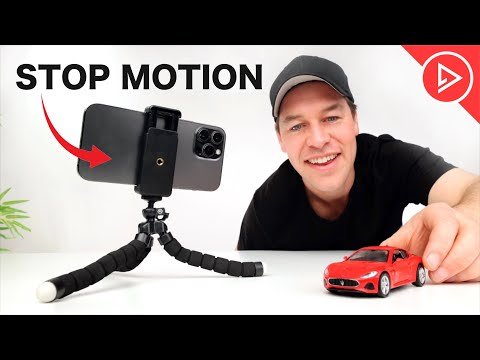
Phone Stop-Motion: Frame Rate, Onion Skinning and Rigging
Turn your smartphone into a miniature animation studio! Master camera lock-off, manual exposure, onion-skin alignment, optimal frame rates, and simple rig removal for smooth stop-motion.

Movie Lighting With Desk Lamps: Shape the Shadows
Turn ordinary desk lamps into cinematic movie lighting. Learn how to shape dramatic shadows, build DIY diffusers, and light miniature sets safely without spending big on studio gear.
That’s this batch. More to explore another time.
This topic is AI-assisted and human-edited, and may contain errors or bias. If you own a featured video and do not want it displayed, please contact us.